Short answer: the best whitetail hunting map app does more than show property lines — it layers the imagery, topo, and data you need to e-scout, then turns it into a wind-and-pressure strategy that tells you which stand to hunt on a given day.
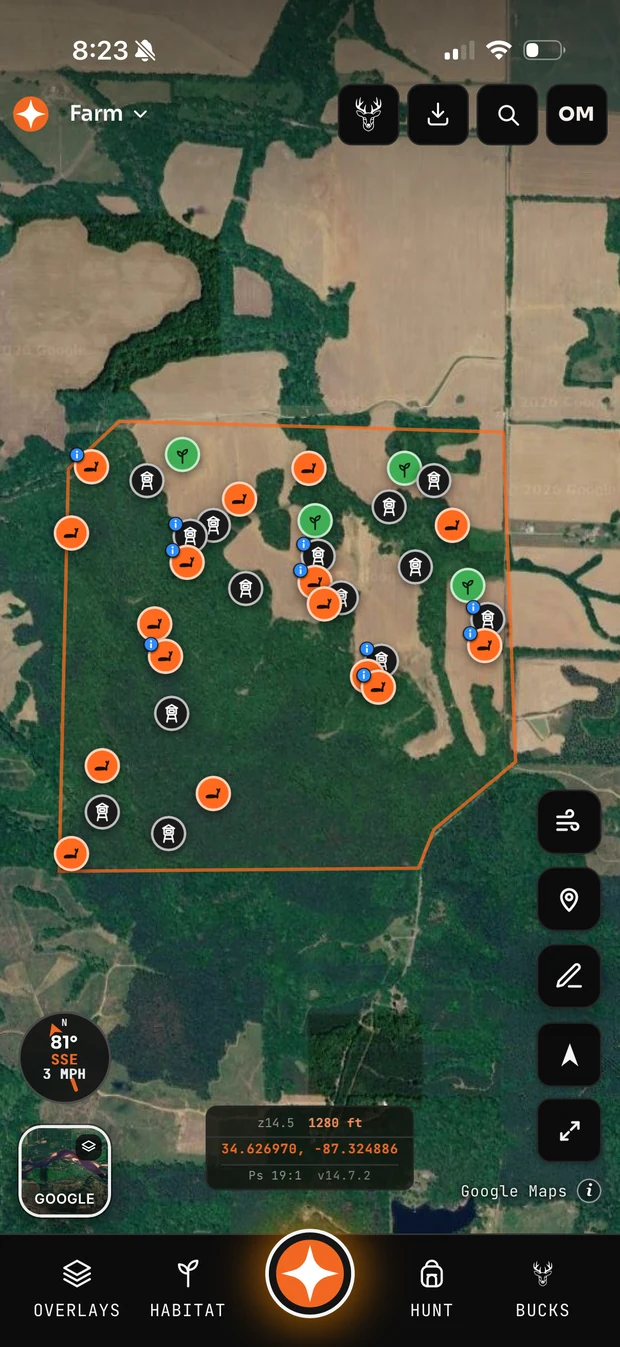
What to look for
- High-quality imagery and topo: satellite, contours, and hillshade to read cover and terrain.
- Property and public-land layers: parcels and public boundaries so you know where you can hunt.
- Wind and scent tools: scent cones and per-stand wind grading, not just a wind arrow.
- Pressure and bedding intelligence: a way to see where mature bucks feel safe.
- Forecast-aware planning: weather, movement timing, and the rut tied to your sit.
- Offline-friendly, fast, and private: your data is yours and stays put.
Beyond lines on a map
Most apps stop at boundaries and waypoints. The leap is intelligence: connecting bedding, food, terrain, pressure, wind, and weather into an answer to the only question that matters in the morning — which stand do I hunt right now?
Why hunters choose Contors
Contors combines satellite mapping, USGS topo and contours, parcel and public-land layers, a Buck Refuge Model, scent cones, thermals, a forecast-driven movement and rut engine, GPS walk-in navigation, and a conditions-logging journal — then scores and ranks your stands so you always know the best one to sit. Create a free account and map your ground.