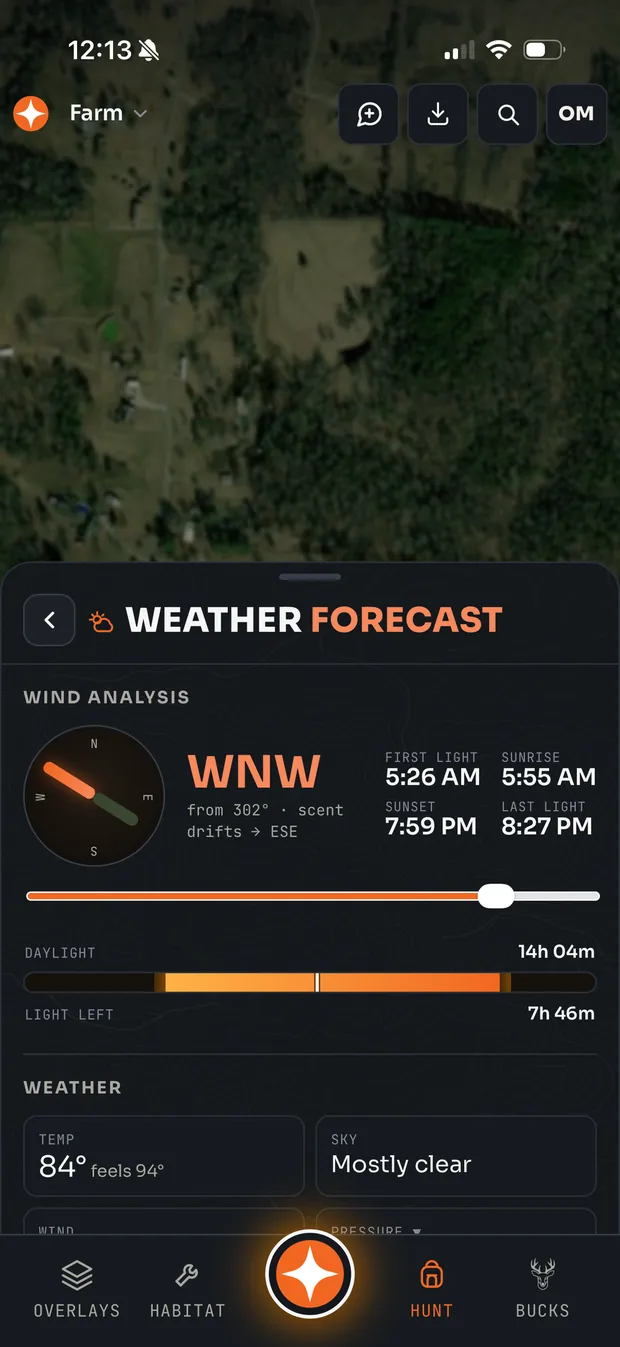
Short answer: keep the wind blowing from the deer to you — into your face or quartering across it — and never let it carry your scent toward bedding, food, or the trail you expect deer to use. Getting winded is the single most common reason hunters never see the mature buck living on their ground.
Why wind beats every other factor
A whitetail's sense of smell is estimated to be thousands of times more sensitive than a human's, and a buck can pick up airborne human odor from hundreds of yards downwind. You can pick the perfect tree, hunt the peak of the rut, and time a cold front — but one bad wind busts the hunt before legal light.
How to actually play the wind
- Hunt the downwind edge so your scent blows away from bedding and travel routes.
- Plan a clean entry and exit that never crosses where deer bed or feed.
- Carry options. Most properties need three or four stands so one always fits the day's wind.
- Account for thermals in hilly country — they can override the prevailing wind at dawn and dusk.
Read the wind on a map first
Mapping your stands against bedding and food lets you see your scent before you climb in. A scent-cone overlay shows exactly where your odor drifts on a given wind, so you instantly know which setups are clean and which are blown out. Contors grades every stand against the current or forecast wind and lists the clean winds to hunt each one — so you choose the right stand before you leave the truck.