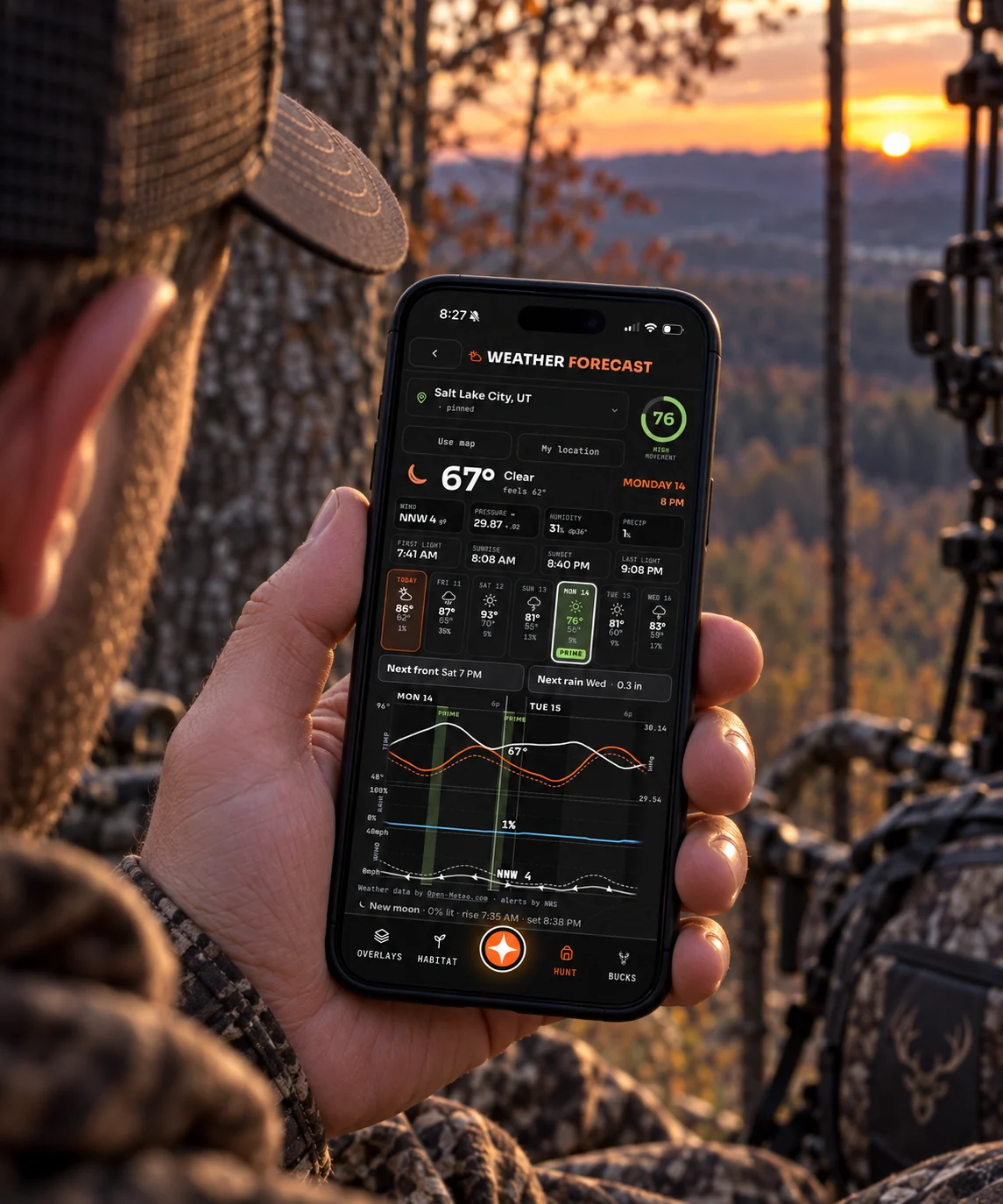
Short answer: the best daytime deer movement comes on rising barometric pressure behind a cold front, with a sharp temperature drop and light-to-moderate wind. A high-pressure, cold, clear day after a front is prime time.
The weather triggers that matter
- Barometric pressure: a fast drop ahead of a front gets deer feeding; the rising, high pressure right after the front often produces the best daylight movement.
- Temperature swings: the first hard cold snap of fall, and any 15–20°F drop, pushes deer to feed.
- Wind: light to moderate wind is fine; deer move less in hard, gusty wind.
- Precipitation: deer often move ahead of rain and feed heavily once it stops.
Stacking the conditions
The magic happens when several triggers line up: a cold front passes, the temperature crashes, the barometer climbs, and the wind lays down. Add a dawn or dusk window — and the rut — and you have the kind of morning bucks make mistakes.
Forecasting your sit
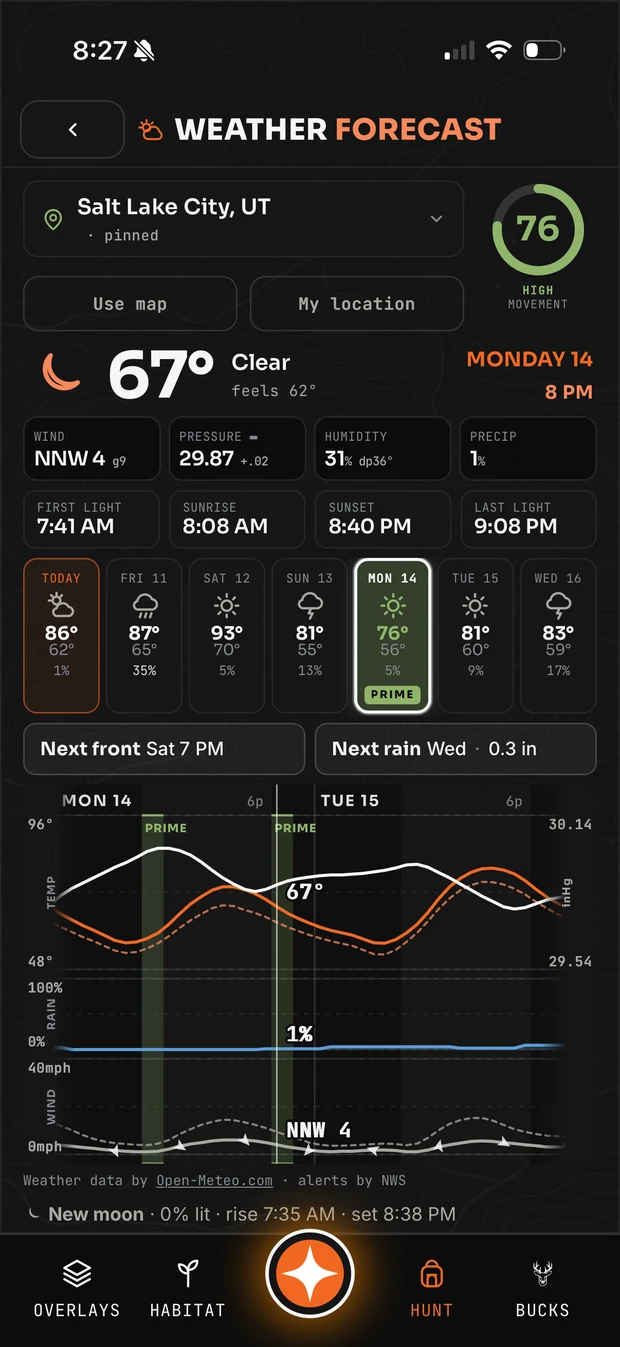
Instead of guessing, score the forecast. Contors reads the hourly forecast for your exact spot, factors pressure, temperature, and wind into a movement rating, flags the best windows, and even sets the wind dial from the forecast so it can rank your stands for that specific sit.