
Maps · Intelligence · Elevated

Intelligent Maps
Built for Hunters

CNTORS combines satellite mapping, real-time weather, wind management, and AI-powered buck prediction — so you spend less time guessing and more time tagging out.

15+Map Layers
16-dayForecast
FreeTo Start
What You Get

Every Tool Serious Hunters Need

Built from the ground up for whitetail hunters who take their property seriously.

Satellite + Topo Maps

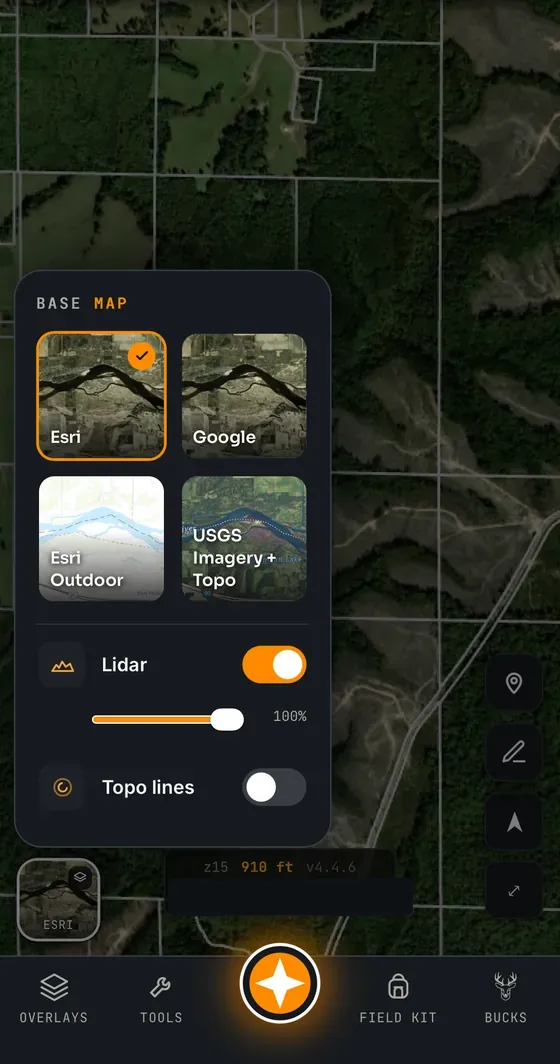
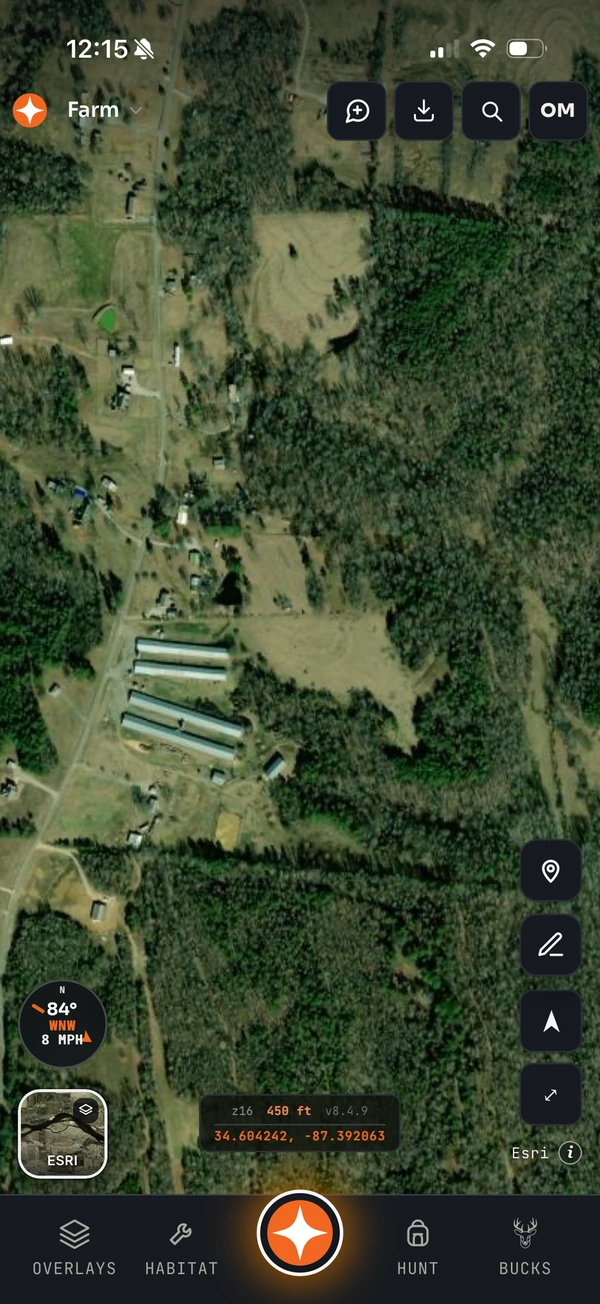
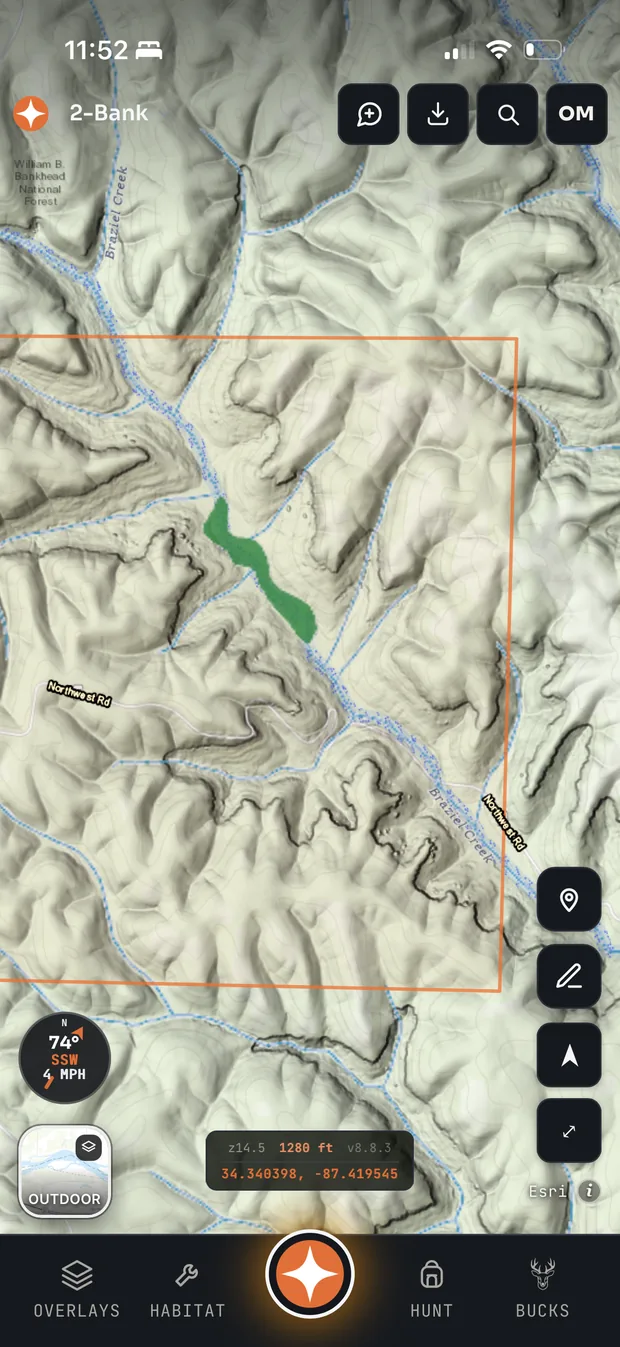
Switch instantly between Google Hybrid, USGS aerial imagery, NAIP, OpenTopo, hillshade, and contour overlays. See your property the way deer see it — from every angle.

Buck Refuge Model

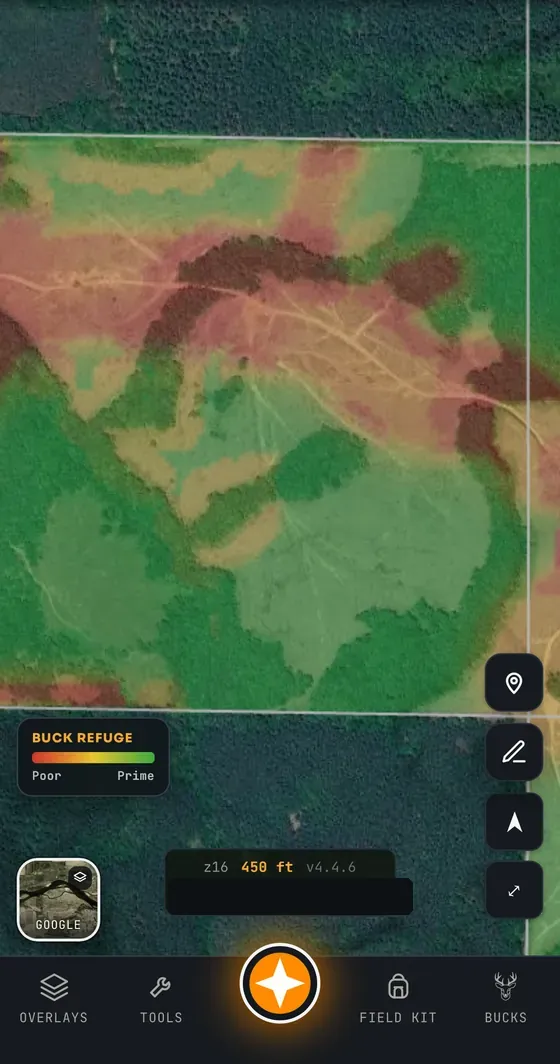
Our pressure/refuge algorithm reads your roads, routes, stands, buildings, and cover shapes — then paints a live heat map showing exactly where mature bucks are bedding and staging. Updates in real time as you add data.

CNTORS Exclusive

Wind & Scent Control

Visual scent cones from every stand show exactly where your odor drifts at any wind direction. Hill thermal arrows show actual downhill/uphill drift based on real elevation data — not just wind direction.

Weather Intelligence

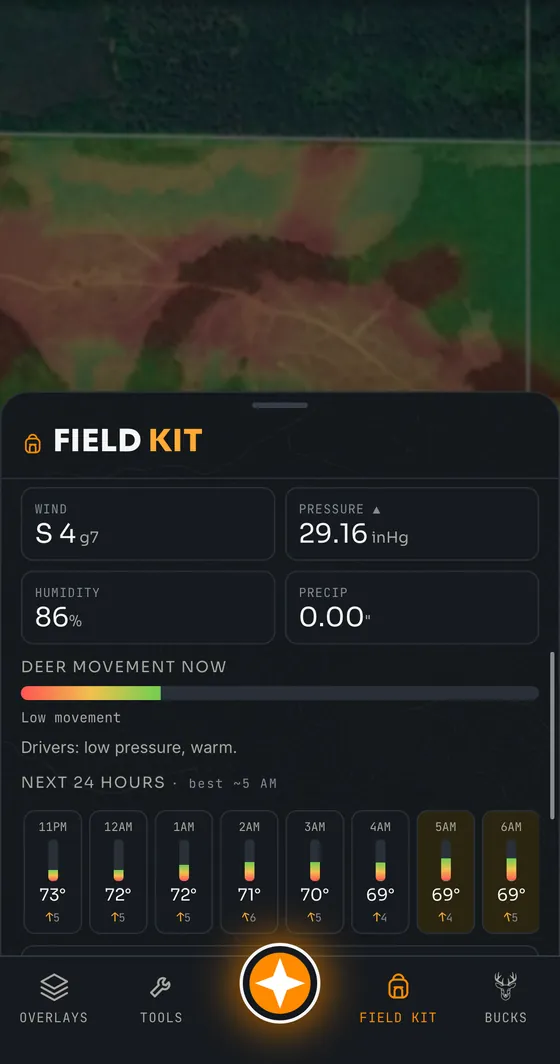
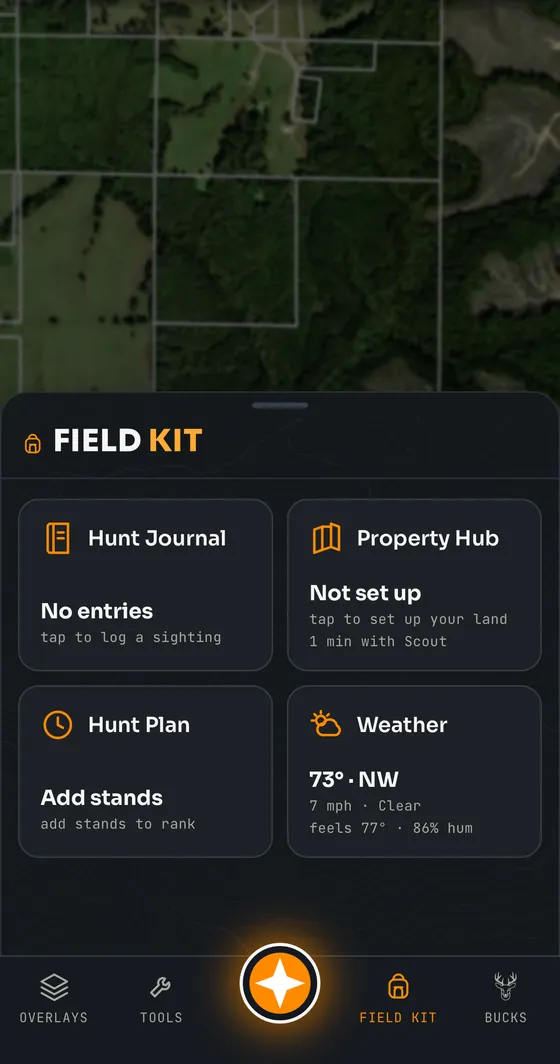
Live current conditions plus a 16-day forecast. A Deer Movement Index scores each hour — dawn windows, pressure changes, temperature swings. Plan your sits a week out and have the forecast wind auto-set your dial.

Full Property Mapping

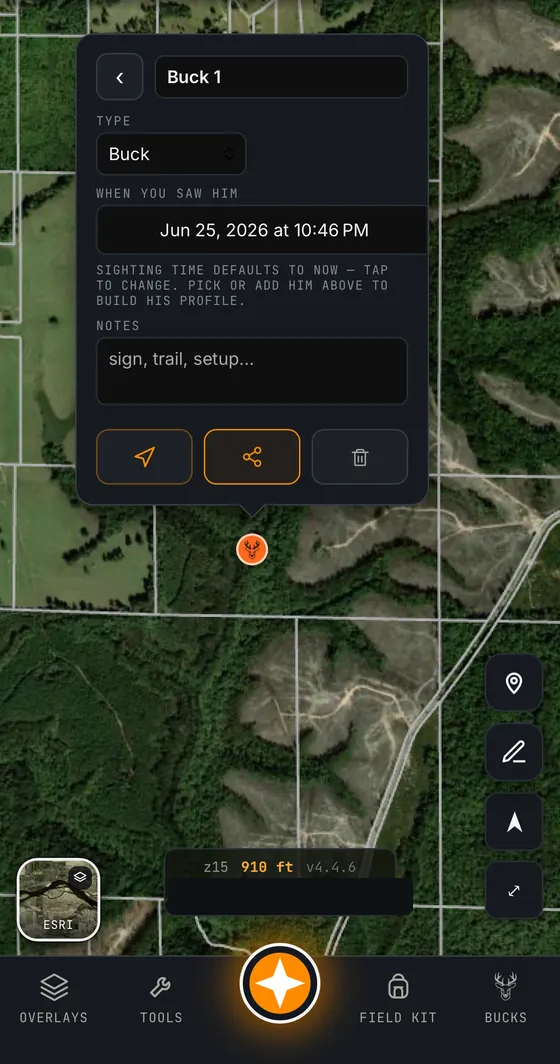
Draw your property boundary, food plots, ag fields, hardwoods, pines, cutover, ponds, creeks, and sanctuary areas. Mark stands, blinds, cameras, scrapes, rubs, and bedding areas. Everything stored to your account.

Mobile Ready

Designed for the field. Fast, touch-friendly, works on any phone or tablet. Add it to your home screen for an app-like experience. Your data syncs to your account so nothing is ever lost when you update.

Getting Started

Up and Running in Minutes

01

Create your free account

Sign up in seconds — no credit card, no commitments. Your maps and markers sync to your account so they follow you across devices.

02

Map your property

Draw your boundary, mark your stands and cameras, and trace your cover types. Scan your area to detect road and building pressure sources.

03

Turn on the Buck Refuge Model

Flip the switch and CNTORS paints a live heat map over your property — red for high human pressure areas bucks avoid, green for the secure bedding and staging zones they favor. It updates live as you add data.

04

Plan your hunt

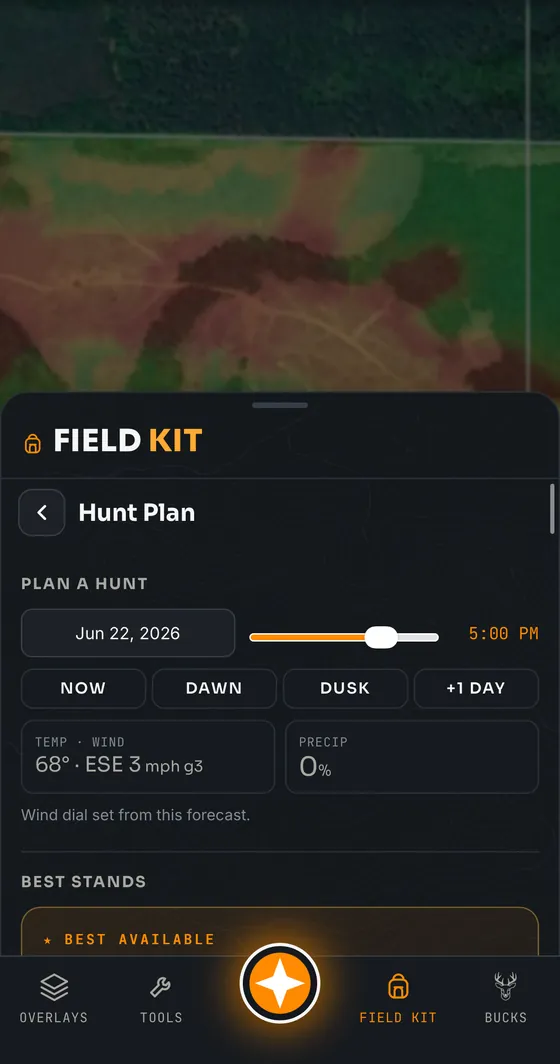
Pick a date and time — CNTORS pulls the forecast wind and temp for that exact hour. Check the Deer Movement Index, confirm your scent cone clears your approach, and walk in with confidence.

The Science

The Buck Refuge Model

Most hunters know pressure kills mature buck activity. CNTORS quantifies it — and shows you where those bucks go instead.

Pressure sources
Every road, building, ATV trail, walking route, and parking spot creates a pressure gradient using a Gaussian decay model. Roads from OSM auto-scan. Your custom routes and pins add more.
Refuge factors
Thick cover, sanctuaries, pines, and cutover get a cover boost. Food staging bands shift with rut phase. Water proximity adds a bonus. Security is the inverse of pressure — squared, so deer strongly prefer low-intrusion ground.
Live and adaptive
Add a stand, draw a sanctuary, trace a route — the model recalculates immediately. Season shifts (pre-rut, rut, post-rut) change the food staging radius automatically. Your intel, your property, your model.
Pressure / Avoid
Roads & buildings
ATV trails & routes
Walking pressure
Refuge / Move Through
Thick cover & sanctuary
Food staging corridors
Low-pressure bedding
Hunting Intelligence

Learn to Hunt Smarter

Guides and insights for serious whitetail hunters — from mapping your property to reading the rut.

Wind Science

How to Use Wind Direction When Hunting Whitetail Deer

A whitetail's nose is its #1 defense. Play the wind right and a mature buck never knows you exist.

Wind directionScent controlMature bucks
Terrain

How to Read Topo Maps: Funnels, Saddles, Pinch Points and Benches

Deer move through the path of least resistance. Topo lines reveal exactly where that is.

Topo mapsTerrainStand placement
Hunting Pressure

Hunting Pressure: Why Mature Bucks Avoid Certain Areas and Where They Hide

Every truck door, every trail, every careless entry teaches a buck where danger lives.

Hunting pressureBuck behaviorSanctuary
Weather

How Weather Drives Deer Movement: Barometric Pressure, Cold Fronts and Wind

Bucks get on their feet when the weather tells them to. Learn the triggers.

Deer movementCold frontsBarometric pressure
Bedding

Where Do Mature Bucks Bed? How to Find Buck Bedding Areas

Find the bed and you've found the buck. Here's how to locate bedding from a map.

Buck beddingE-scoutingSecurity cover
Thermals

Thermals Explained: How Morning and Evening Air Currents Carry Your Scent

In hill country, thermals beat the prevailing wind at dawn and dusk. Ignore them and you'll get busted.

ThermalsScent controlHill country
The Rut

When Is the Whitetail Rut? A Timing Guide by Phase and Region

The rut is the best two weeks of the year — if you know when it actually peaks where you hunt.

Whitetail rutRut timingSeeking and chasing
E-Scouting

How to E-Scout a New Hunting Property with Satellite Maps

Find the best stands from your couch before you ever set foot on the property.

E-scoutingSatellite mapsProperty mapping
Travel Corridors

Food Sources and Travel Corridors: Connecting Bedding to Food

Bucks live between the bed and the buffet. The connection is where you kill them.

Travel corridorsFood sourcesStand placement
Gear & Apps

What Makes the Best Hunting Map App for Whitetail Deer?

Not all hunting apps are equal. Here's what actually matters for killing mature bucks.

Hunting appMappingWhitetail strategy
Wind Science

How to Use Wind Direction When Hunting Whitetail Deer

Short answer: keep the wind blowing from the deer to you — into your face or quartering across it — and never let it carry your scent toward bedding, food, or the trail you expect deer to use. Getting winded is the single most common reason hunters never see the mature buck living on their ground.

Why wind beats every other factor

A whitetail's sense of smell is estimated to be thousands of times more sensitive than a human's, and a buck can pick up airborne human odor from hundreds of yards downwind. You can pick the perfect tree, hunt the peak of the rut, and time a cold front — but one bad wind busts the hunt before legal light.

How to actually play the wind

  • Hunt the downwind edge so your scent blows away from bedding and travel routes.
  • Plan a clean entry and exit that never crosses where deer bed or feed.
  • Carry options. Most properties need three or four stands so one always fits the day's wind.
  • Account for thermals in hilly country — they can override the prevailing wind at dawn and dusk.

Read the wind on a map first

Mapping your stands against bedding and food lets you see your scent before you climb in. A scent-cone overlay shows exactly where your odor drifts on a given wind, so you instantly know which setups are clean and which are blown out. Contors grades every stand against the current or forecast wind and lists the clean winds to hunt each one — so you choose the right stand before you leave the truck.

Terrain

How to Read Topo Maps: Funnels, Saddles, Pinch Points and Benches

Short answer: deer travel the easiest route the terrain offers, and contour lines on a topo map show you those routes before you ever step in the woods. Learn to spot four features — funnels, saddles, pinch points, and benches — and you can predict where bucks walk.

The four terrain features that hold deer

  • Saddles: a low dip in a ridgeline. Deer cross ridges at the lowest, easiest point — read as an hourglass in the contour lines.
  • Benches: a flat shelf on a hillside (contour lines spread apart between tight ones). Bucks bed and travel along them just off the top.
  • Pinch points / funnels: where terrain or cover squeezes movement into a narrow lane — an inside corner of a field, a strip of timber between two open areas, a creek crossing.
  • Points and spurs: finger ridges that bucks use as travel highways and bedding spots with the wind and thermals in their favor.

Why it works

A mature buck conserves energy and stays hidden. Given a choice, he takes the route that's easiest to walk and keeps him in cover with the wind at his advantage. Terrain funnels concentrate that movement into predictable lanes — the highest-odds places to hang a stand.

Put it on the map

Overlay contour lines and hillshade on satellite imagery and the funnels jump out. Contors layers USGS contours and 3-D hillshade over high-resolution imagery so you can scout terrain from home, mark the pinch points, and set stands where the map says deer have to walk.

Hunting Pressure

Hunting Pressure: Why Mature Bucks Avoid Certain Areas and Where They Hide

Short answer: mature bucks survive by avoiding human pressure, so they push their daylight movement into the low-traffic interior cover farthest from roads, parking, trails, and houses. Find that low-pressure refuge and you've found where the biggest bucks live.

How pressure changes buck behavior

Research on collared bucks shows that once hunting pressure rises, mature deer shrink their daytime range, shift to thicker cover, and move more at night. They learn the pattern of human intrusion — where you park, the trails you walk, the times you're in the woods — and they route around it.

Mapping the pressure on your ground

  • Roads and vehicle access create the strongest pressure; it fades with distance.
  • ATV trails, walking routes, parking, and buildings each add their own layer.
  • The interior pocket that's farthest from all of it — and still has security cover — is the refuge.

Hunt the edge of the refuge, not the middle

Don't blow out the sanctuary by hunting inside it. Set up on the downwind travel edge between that refuge and the nearest food, with a clean entry. Contors' Buck Refuge Model sums every pressure source, fades it with distance, and highlights the low-pressure interior cover sitting a travel band off food and water — so you can see the refuge instead of guessing.

Weather

How Weather Drives Deer Movement: Barometric Pressure, Cold Fronts and Wind

Short answer: the best daytime deer movement comes on rising barometric pressure behind a cold front, with a sharp temperature drop and light-to-moderate wind. A high-pressure, cold, clear day after a front is prime time.

The weather triggers that matter

  • Barometric pressure: a fast drop ahead of a front gets deer feeding; the rising, high pressure right after the front often produces the best daylight movement.
  • Temperature swings: the first hard cold snap of fall, and any 15–20°F drop, pushes deer to feed.
  • Wind: light to moderate wind is fine; deer move less in hard, gusty wind.
  • Precipitation: deer often move ahead of rain and feed heavily once it stops.

Stacking the conditions

The magic happens when several triggers line up: a cold front passes, the temperature crashes, the barometer climbs, and the wind lays down. Add a dawn or dusk window — and the rut — and you have the kind of morning bucks make mistakes.

Forecasting your sit

Instead of guessing, score the forecast. Contors reads the hourly forecast for your exact spot, factors pressure, temperature, and wind into a movement rating, flags the best windows, and even sets the wind dial from the forecast so it can rank your stands for that specific sit.

Bedding

Where Do Mature Bucks Bed? How to Find Buck Bedding Areas

Short answer: mature bucks bed in the thickest, most secure cover that lets them use the wind and see or smell danger before it reaches them — often on points, benches, leeward ridges, and isolated cover pockets away from pressure. Locate those features and you've found the core of his range.

What a buck wants in a bed

  • Security cover: thick brush, cutover, cedar thickets, switchgrass, or standing crops.
  • Wind and thermal advantage: wind at his back, eyes covering the downwind approach — classic on the leeward side of a ridge or point.
  • Distance from pressure: the interior pocket farthest from roads, trails, and access.
  • Quick escape: terrain that lets him slip away unseen.

How to find bedding without bumping deer

E-scout it first. On satellite imagery, look for darker, denser cover; on topo, look for points, benches, and the leeward side of ridges. Cross-reference with the low-pressure interior. Confirm with a quick in-season look only when the wind and conditions let you slip in and out clean.

Hunt the bed, not in it

Never hunt inside bedding — set up on the downwind travel route between the bed and the first food or water. Contors lets you mark bedding, then runs scent geometry and travel corridors from the bed to food so you can position a stand on the right edge with a clean entry.

Thermals

Thermals Explained: How Morning and Evening Air Currents Carry Your Scent

Short answer: thermals are vertical air currents driven by temperature. In the morning, cooling-then-warming air and rising sun pull scent uphill; in the evening, cooling air sinks and pulls scent downhill. In hilly terrain they often override the prevailing wind — so plan around them.

Morning vs. evening

  • Morning (warming): as the sun heats the slope, air and your scent rise uphill. Hunt below the deer where your scent climbs away from them.
  • Evening (cooling): as temperatures fall, air and scent sink downhill into the valleys. Hunt above the deer so your scent drifts down and away.
  • Midday and flat ground: thermals are weak; the prevailing wind rules.

Why hunters get fooled

You can have a "good" wind on the weather app and still get winded because the local thermal is doing the opposite down in the drainage. The steeper the terrain and the bigger the temperature swing, the stronger the thermal pull.

Mapping thermals

Thermals follow the slope, so elevation data predicts them. Contors reads the terrain around each stand and draws the thermal-drift direction for the morning or evening you plan to hunt, then folds it into each stand's score — so your scent plan accounts for the air that's actually moving, not just the forecast wind.

The Rut

When Is the Whitetail Rut? A Timing Guide by Phase and Region

Short answer: across most of the United States, peak breeding falls in mid-November, with the pre-rut "seeking and chasing" in late October to early November and a secondary rut about a month later. Timing shifts by region — the Deep South and parts of Texas can run late December into January.

The phases of the rut

  • Pre-rut (late Oct–early Nov): bucks make scrapes and rubs and start cruising; great time to hunt sign and funnels.
  • Seeking & chasing (early–mid Nov): bucks are on their feet in daylight searching for the first hot does — the classic "rut" hunting.
  • Peak breeding / lockdown (mid Nov): bucks pair with does and movement can briefly stall.
  • Post-rut & second rut (Dec): a smaller flurry as the remaining does and doe fawns cycle.

It's about daylight, not date

Breeding timing is driven mainly by photoperiod, so it's remarkably consistent year to year for a given latitude — but it varies by region. Southern herds breed later than northern ones. Hunt the seeking-and-chasing window for the most daylight buck movement.

Know your local timing

Contors sets the rut phase based on your map location and lets you adjust the peak date, so the rut card, the model, and the assistant all reflect the timing where you actually hunt — not a generic mid-November assumption.

E-Scouting

How to E-Scout a New Hunting Property with Satellite Maps

Short answer: e-scouting is studying satellite imagery, topo maps, and aerial data to find likely bedding, food, travel routes, and stand sites before you walk in — so your boots-on-the-ground time confirms a plan instead of starting from scratch and bumping deer.

A simple e-scouting workflow

  • Mark the boundaries and note access, roads, and neighboring pressure.
  • Find the food: ag fields, food plots, oak flats, clear-cuts, and edges on imagery.
  • Find the bedding: thick cover on satellite, plus points, benches, and leeward ridges on topo.
  • Connect them: the travel corridors between bedding and food, squeezed by terrain funnels, are your stand sites.
  • Plan entry/exit and wind for each spot so you can hunt it clean.

Why it works

Deer relate to the landscape — cover, food, terrain, and pressure — and most of that is visible from above. A good e-scout narrows a 200-acre property down to a handful of high-odds setups before you risk educating a single deer.

Do it all in one place

Contors puts Google and Esri imagery, USGS topo and contours, hillshade, public-land and parcel layers, and crop data on one map, then lets you drop stands and bedding, draw your boundary for acreage, and grade each spot against the wind — a complete e-scout from your phone or laptop.

Travel Corridors

Food Sources and Travel Corridors: Connecting Bedding to Food

Short answer: deer spend the day bedded and move to food in the evening and back at dawn, so the travel corridor that connects bedding to the nearest food is the highest-odds place to intercept them — especially where terrain or cover pinches that movement into a narrow lane.

Map the food first

  • Ag and food plots: beans, corn, brassicas, clover, winter wheat.
  • Natural browse and mast: white oak acorns, soft mast, cutovers, and edge browse.
  • Water: in dry or warm conditions, water sources concentrate movement too.

Find the line between bed and food

Draw a line from each bedding area to the closest, best food. Bucks rarely walk it in a straight shot — they follow cover and easy terrain. Where that line crosses a funnel, an inside corner, a creek crossing, or a strip of timber, that's your stand. Set up on the downwind side, slightly toward the bedding for evening sits so you catch deer before dark.

See the corridors

Contors automatically draws likely travel corridors between the bedding and food you mark, factors in cover and pressure, and grades the stands along them against the wind — turning a hunch about "where they probably travel" into a mapped, rankable plan.

Gear & Apps

What Makes the Best Hunting Map App for Whitetail Deer?

Short answer: the best whitetail hunting map app does more than show property lines — it layers the imagery, topo, and data you need to e-scout, then turns it into a wind-and-pressure strategy that tells you which stand to hunt on a given day.

What to look for

  • High-quality imagery and topo: satellite, contours, and hillshade to read cover and terrain.
  • Property and public-land layers: parcels and public boundaries so you know where you can hunt.
  • Wind and scent tools: scent cones and per-stand wind grading, not just a wind arrow.
  • Pressure and bedding intelligence: a way to see where mature bucks feel safe.
  • Forecast-aware planning: weather, movement timing, and the rut tied to your sit.
  • Offline-friendly, fast, and private: your data is yours and stays put.

Beyond lines on a map

Most apps stop at boundaries and waypoints. The leap is intelligence: connecting bedding, food, terrain, pressure, wind, and weather into an answer to the only question that matters in the morning — which stand do I hunt right now?

Why hunters choose Contors

Contors combines satellite mapping, USGS topo and contours, parcel and public-land layers, a Buck Refuge Model, scent cones, thermals, a forecast-driven movement and rut engine, GPS walk-in navigation, and a conditions-logging journal — then scores and ranks your stands so you always know the best one to sit. Create a free account and map your ground.

Advanced Features

Tools No Other App Offers

NWS Weather Radar

Live NEXRAD radar overlay in the classic green-yellow-red precipitation palette. Current conditions only — no animated clutter — refreshing automatically every 5 minutes and whenever you reopen the app.

Deer Movement Index

Each hour in the 24-hour forecast is scored for deer activity — dawn windows, pressure drops, temperature swings, and wind speed combine into a single movement rating. Know your best windows before you leave the house.

Your Data, Your Account

Everything you map — stands, zones, routes, journal entries, and cover shapes — saves to your personal account and syncs across devices. Push an update to the app and your data stays completely untouched.

Best Stand, Right Now

Every stand is scored and ranked for your wind and hunt time — scent geometry to bedding, the stand's best winds, thermal timing and status — and the top pick is flagged ★ Best now. Pick a date and hour to score it on that hour's forecast wind.

Walk-In Navigation

Tap any stand and hit Navigate here: live distance, compass bearing, and an arrow that points the way as you slip in before light. One tap heads back to the nearest parking — your truck — in the dark.

Solunar + Smart Journal

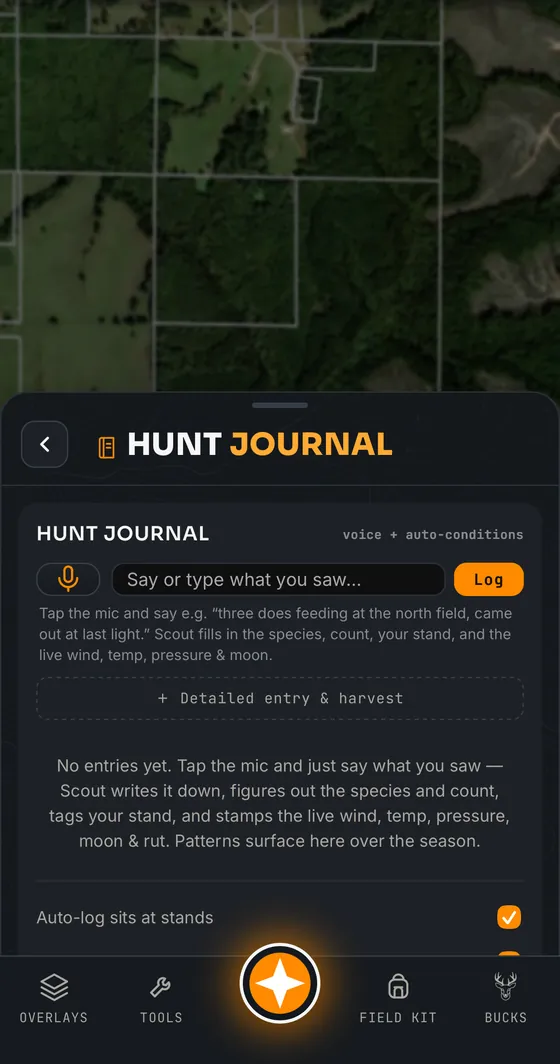
Major and minor feeding periods for every day, rated against your sit. And a journal that auto-captures the wind, temp, moon and rut phase with each entry — so your season's patterns ("most deer on a NW wind") surface on their own.

Start Hunting Smarter Today

Free to start. No credit card. Your first map is ready in minutes.

CNTORS
z14
CNTORS AIHUNTING ASSISTANT