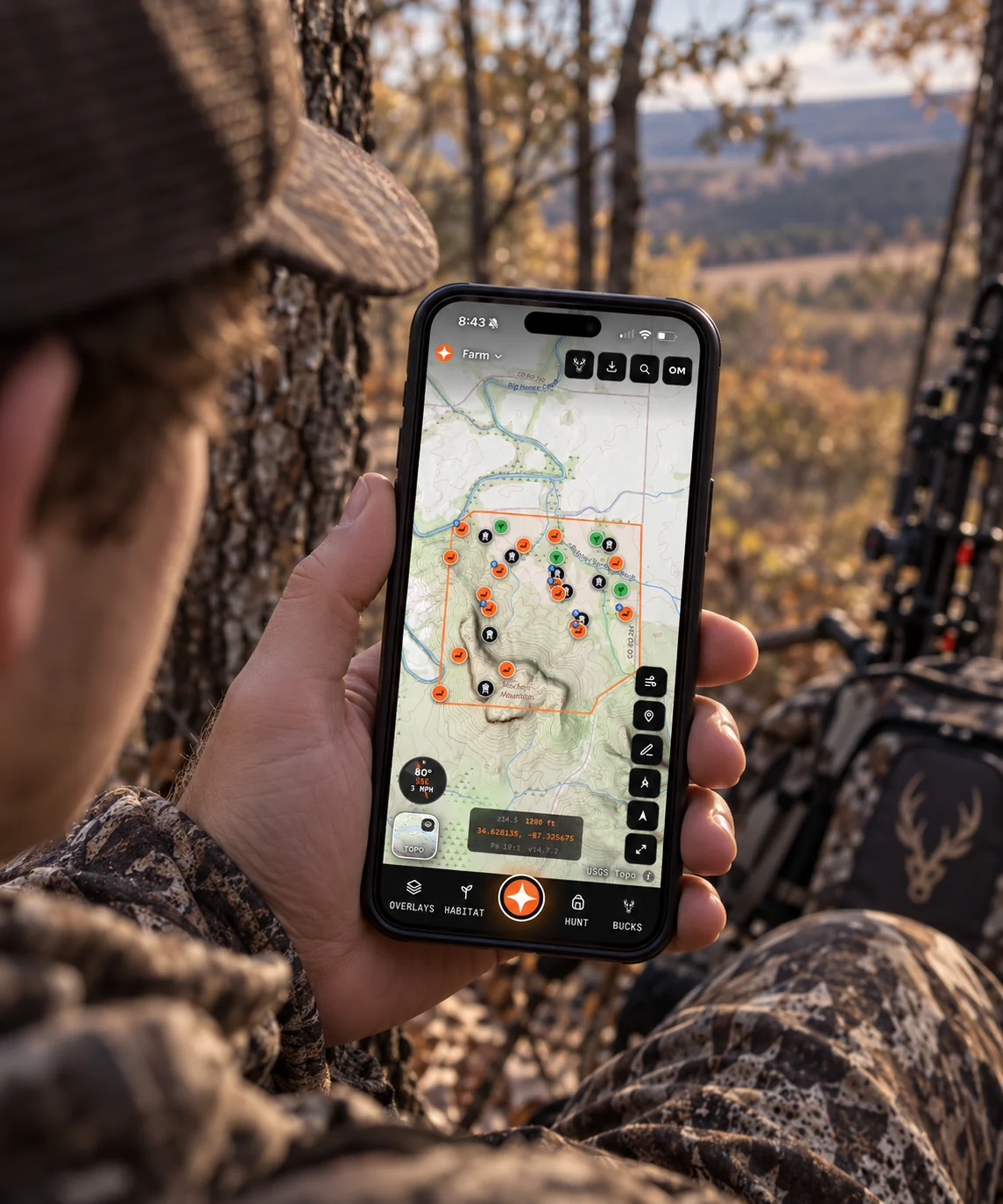
Short answer: deer travel the easiest route the terrain offers, and contour lines on a topo map show you those routes before you ever step in the woods. Learn to spot four features — funnels, saddles, pinch points, and benches — and you can predict where bucks walk.
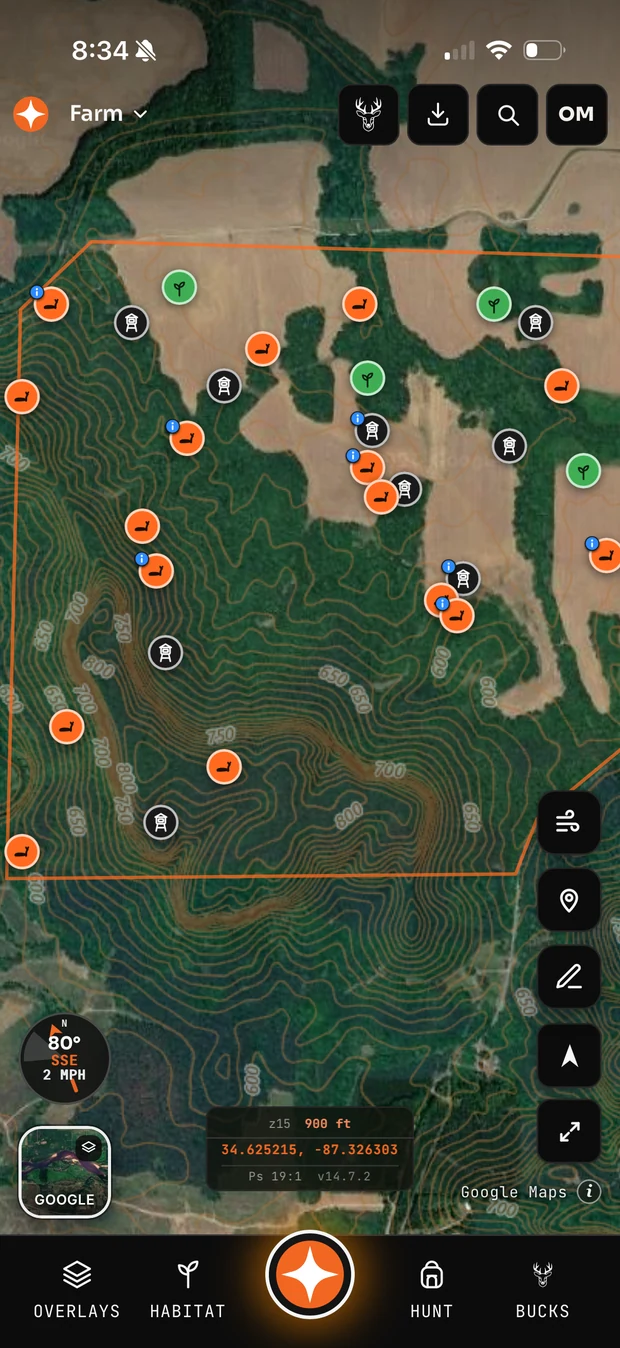
The four terrain features that hold deer
- Saddles: a low dip in a ridgeline. Deer cross ridges at the lowest, easiest point — read as an hourglass in the contour lines.
- Benches: a flat shelf on a hillside (contour lines spread apart between tight ones). Bucks bed and travel along them just off the top.
- Pinch points / funnels: where terrain or cover squeezes movement into a narrow lane — an inside corner of a field, a strip of timber between two open areas, a creek crossing.
- Points and spurs: finger ridges that bucks use as travel highways and bedding spots with the wind and thermals in their favor.
Why it works
A mature buck conserves energy and stays hidden. Given a choice, he takes the route that's easiest to walk and keeps him in cover with the wind at his advantage. Terrain funnels concentrate that movement into predictable lanes — the highest-odds places to hang a stand.
Put it on the map
Overlay contour lines and hillshade on satellite imagery and the funnels jump out. Contors layers USGS contours and 3-D hillshade over high-resolution imagery so you can scout terrain from home, mark the pinch points, and set stands where the map says deer have to walk.