Short answer: mature bucks bed in the thickest, most secure cover that lets them use the wind and see or smell danger before it reaches them — often on points, benches, leeward ridges, and isolated cover pockets away from pressure. Locate those features and you've found the core of his range.
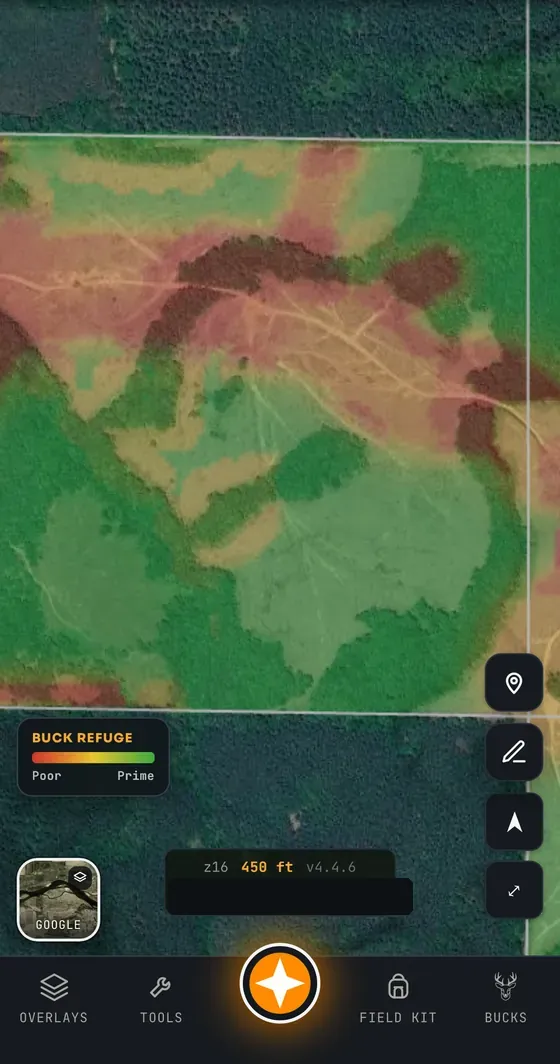
What a buck wants in a bed
- Security cover: thick brush, cutover, cedar thickets, switchgrass, or standing crops.
- Wind and thermal advantage: wind at his back, eyes covering the downwind approach — classic on the leeward side of a ridge or point.
- Distance from pressure: the interior pocket farthest from roads, trails, and access.
- Quick escape: terrain that lets him slip away unseen.
How to find bedding without bumping deer
E-scout it first. On satellite imagery, look for darker, denser cover; on topo, look for points, benches, and the leeward side of ridges. Cross-reference with the low-pressure interior. Confirm with a quick in-season look only when the wind and conditions let you slip in and out clean.
Hunt the bed, not in it
Never hunt inside bedding — set up on the downwind travel route between the bed and the first food or water. Contors lets you mark bedding, then runs scent geometry and travel corridors from the bed to food so you can position a stand on the right edge with a clean entry.