Short answer: thermals are vertical air currents driven by temperature. In the morning, cooling-then-warming air and rising sun pull scent uphill; in the evening, cooling air sinks and pulls scent downhill. In hilly terrain they often override the prevailing wind — so plan around them.
Morning vs. evening
- Morning (warming): as the sun heats the slope, air and your scent rise uphill. Hunt below the deer where your scent climbs away from them.
- Evening (cooling): as temperatures fall, air and scent sink downhill into the valleys. Hunt above the deer so your scent drifts down and away.
- Midday and flat ground: thermals are weak; the prevailing wind rules.
Why hunters get fooled
You can have a "good" wind on the weather app and still get winded because the local thermal is doing the opposite down in the drainage. The steeper the terrain and the bigger the temperature swing, the stronger the thermal pull.
Mapping thermals
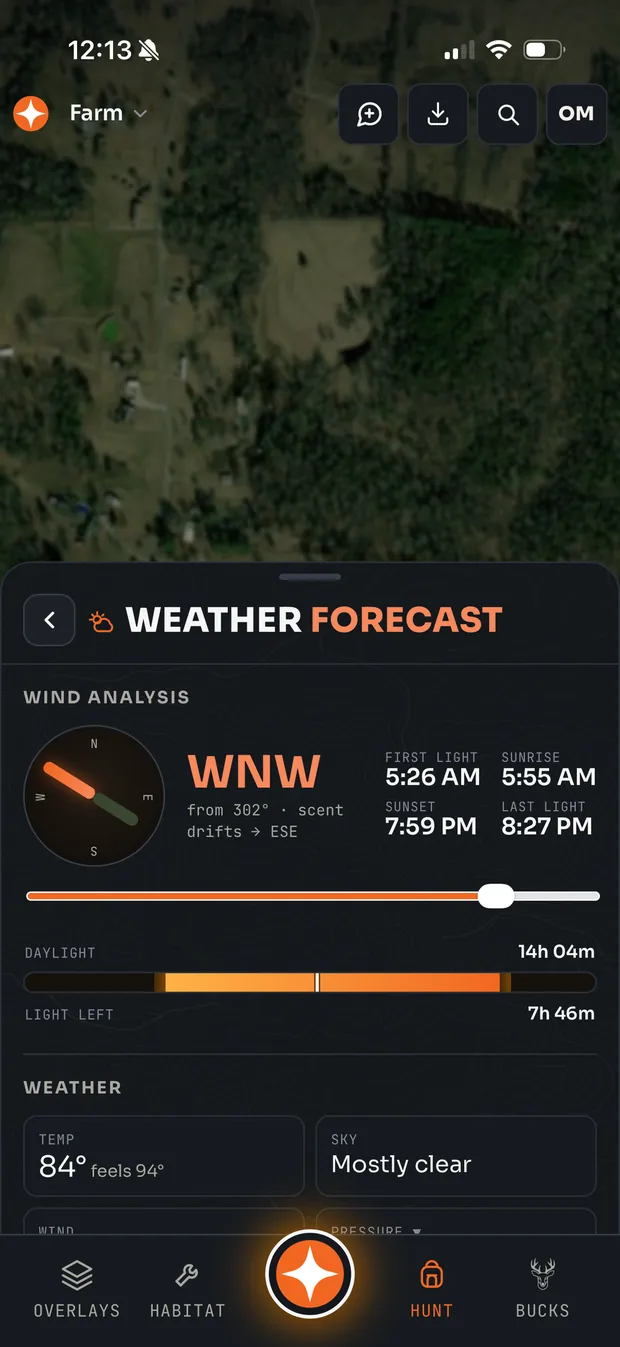
Thermals follow the slope, so elevation data predicts them. Contors reads the terrain around each stand and draws the thermal-drift direction for the morning or evening you plan to hunt, then folds it into each stand's score — so your scent plan accounts for the air that's actually moving, not just the forecast wind.