Short answer: deer spend the day bedded and move to food in the evening and back at dawn, so the travel corridor that connects bedding to the nearest food is the highest-odds place to intercept them — especially where terrain or cover pinches that movement into a narrow lane.
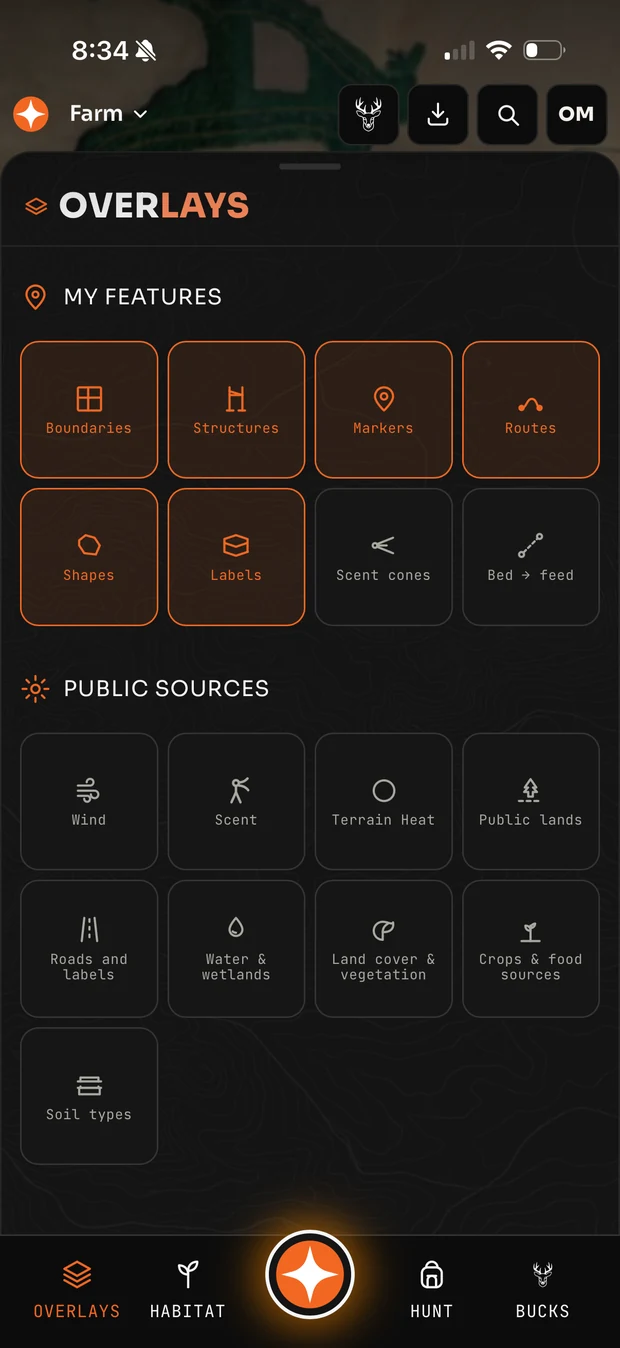
Map the food first
- Ag and food plots: beans, corn, brassicas, clover, winter wheat.
- Natural browse and mast: white oak acorns, soft mast, cutovers, and edge browse.
- Water: in dry or warm conditions, water sources concentrate movement too.
Find the line between bed and food
Draw a line from each bedding area to the closest, best food. Bucks rarely walk it in a straight shot — they follow cover and easy terrain. Where that line crosses a funnel, an inside corner, a creek crossing, or a strip of timber, that's your stand. Set up on the downwind side, slightly toward the bedding for evening sits so you catch deer before dark.
See the corridors
Contors automatically draws likely travel corridors between the bedding and food you mark, factors in cover and pressure, and grades the stands along them against the wind — turning a hunch about "where they probably travel" into a mapped, rankable plan.