Short answer: mature bucks survive by avoiding human pressure, so they push their daylight movement into the low-traffic interior cover farthest from roads, parking, trails, and houses. Find that low-pressure refuge and you've found where the biggest bucks live. How many deer the ground can carry sets the backdrop for all of it — the deer density calculator estimates it from habitat quality.
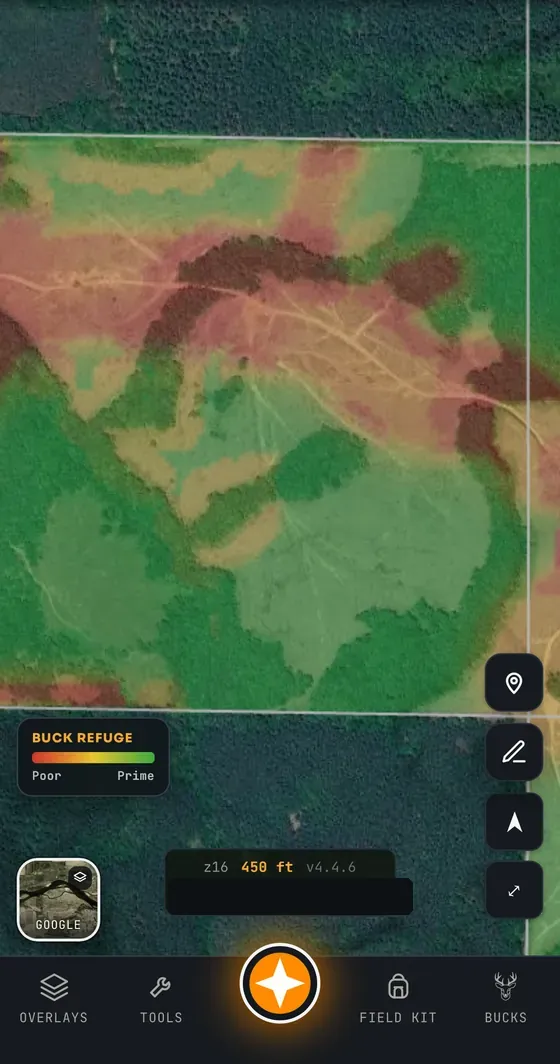
How pressure changes buck behavior
Research on collared bucks shows that once hunting pressure rises, mature deer shrink their daytime range, shift to thicker cover, and move more at night. They learn the pattern of human intrusion — where you park, the trails you walk, the times you're in the woods — and they route around it.
Mapping the pressure on your ground
- Roads and vehicle access create the strongest pressure; it fades with distance.
- ATV trails, walking routes, parking, and buildings each add their own layer.
- The interior pocket that's farthest from all of it — and still has security cover — is the refuge.
Hunt the edge of the refuge, not the middle
Don't blow out the sanctuary by hunting inside it. Set up on the downwind travel edge between that refuge and the nearest food, with a clean entry. Contors' Buck Refuge Model sums every pressure source, fades it with distance, and highlights the low-pressure interior cover sitting a travel band off food and water — so you can see the refuge instead of guessing.