Every Buck You Are After, on the Map
Contors keeps a profile for each buck you are hunting and ties every sighting to the spot it happened. Over a season that turns a pile of camera photos and half-remembered encounters into a pattern you can actually hunt.
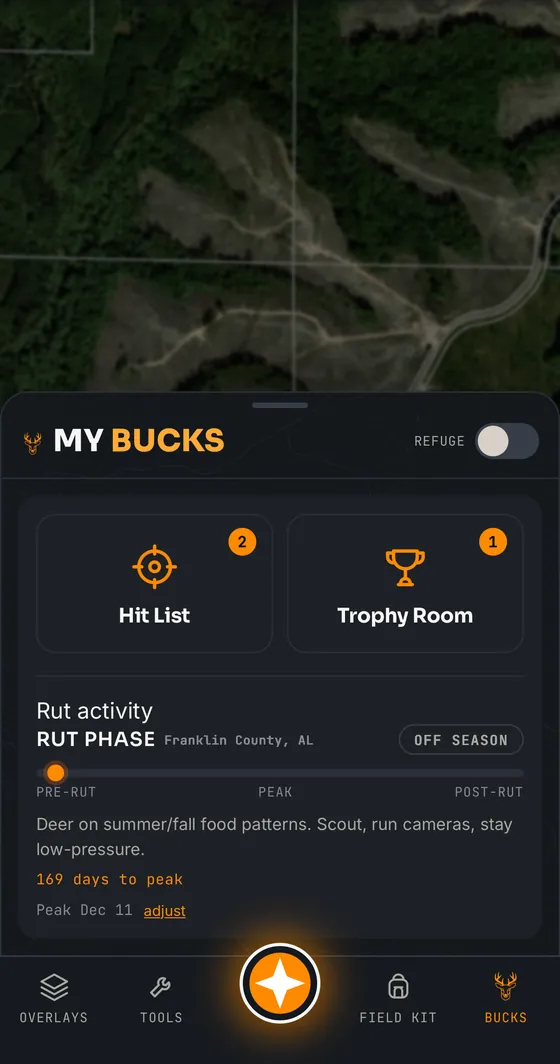
Target buck profiles
Give a buck a name and he gets his own record: photos, the sightings logged against him, where each one happened, and the conditions at the time.
Sightings that stay on the map
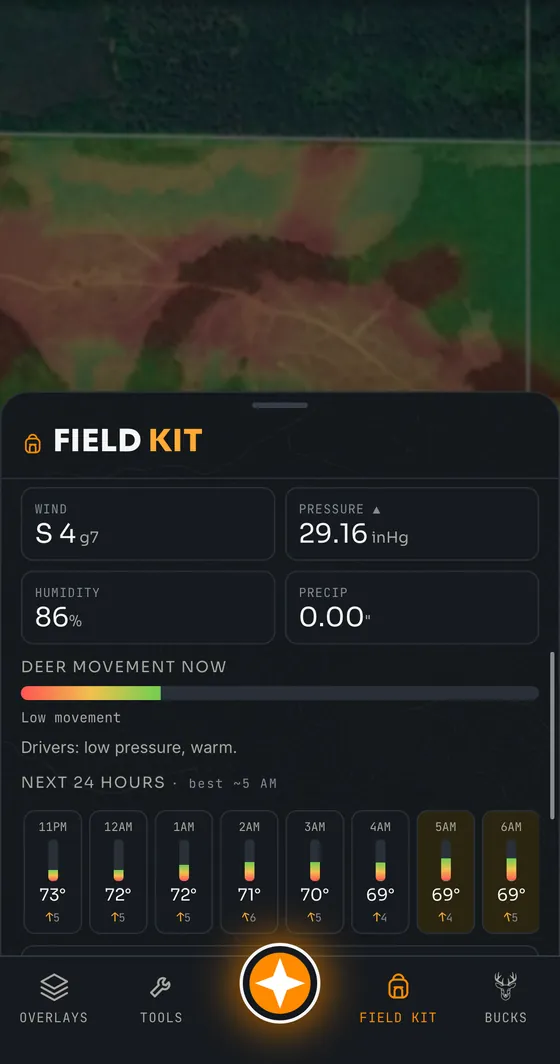
Log a sighting from the field and it is pinned where you saw him, stamped with the date, time, wind direction, temperature, pressure, moon phase and rut phase automatically. Ask Scout what you saw at a stand and it reads these back.
Trail camera photos link to the camera they came from, so a buck’s history is spatial rather than a folder of images.
AI aging and scoring
Buck Score reads a photo and estimates the deer’s age and gross score, with the reasoning shown rather than a bare number.
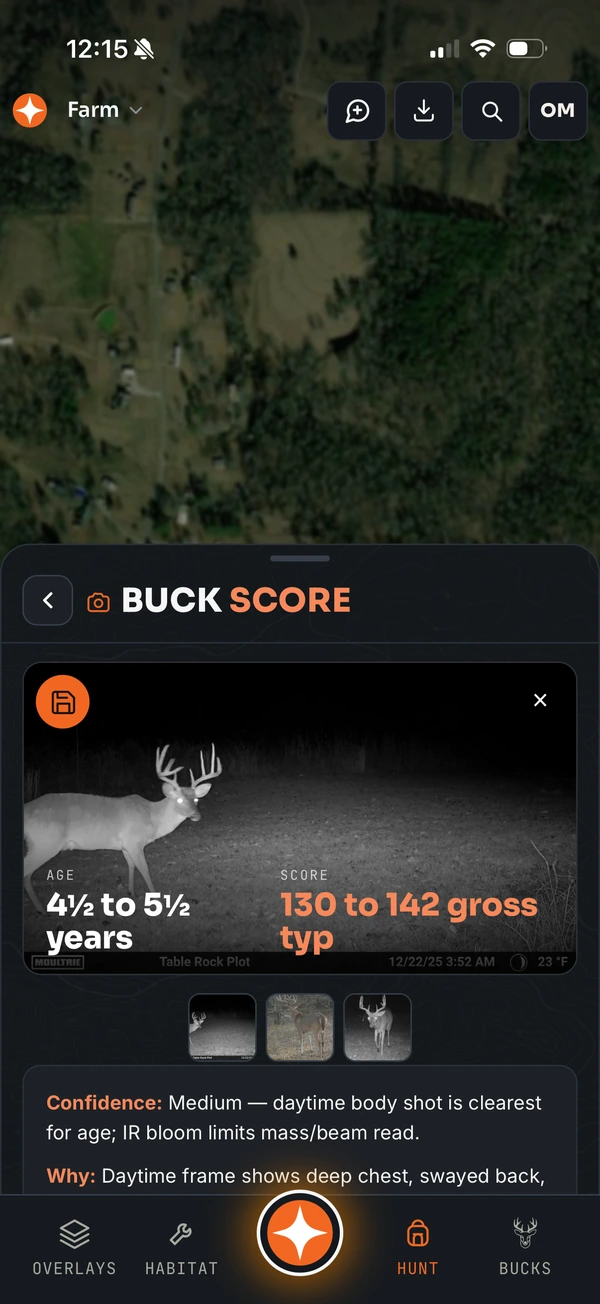
It is an estimate from a photograph, and it says so. Photo angle, light and the deer’s posture all move the answer — treat it the way you would treat a good second opinion, not a tape measure.
Buck Score is included from Pro at three scans per month, and is unlimited on the Unlimited plan.
Common questions
Can Contors age a buck from a trail camera photo?
Yes. Buck Score estimates a deer’s age and gross score from a photo and shows the reasoning behind the estimate. It is an estimate from an image, not a measurement, and photo angle and posture affect it.
How many Buck Scores do I get?
Three per month on the Pro plan, and unlimited on the Unlimited plan.
Are sightings tied to a location?
Yes. Each sighting is pinned where it happened and automatically stamped with date, time, wind direction, temperature, pressure, moon phase and rut phase, so a season of sightings builds a spatial pattern rather than a list.
Can Scout answer questions about a specific buck?
Yes. Because sightings and buck profiles are part of your property data, you can ask Scout what you have seen of a given buck, where, and under what conditions.
Related: all features · Buck Score · AI trail camera scoring · Scout AI