The whitetail,
explained.
Anatomy, senses, antlers, the rut, movement, nutrition, age and disease of Odocoileus virginianus — written from peer-reviewed research, illustrated with original diagrams, and explained the way a good textbook explains a hard subject: clearly and accurately.
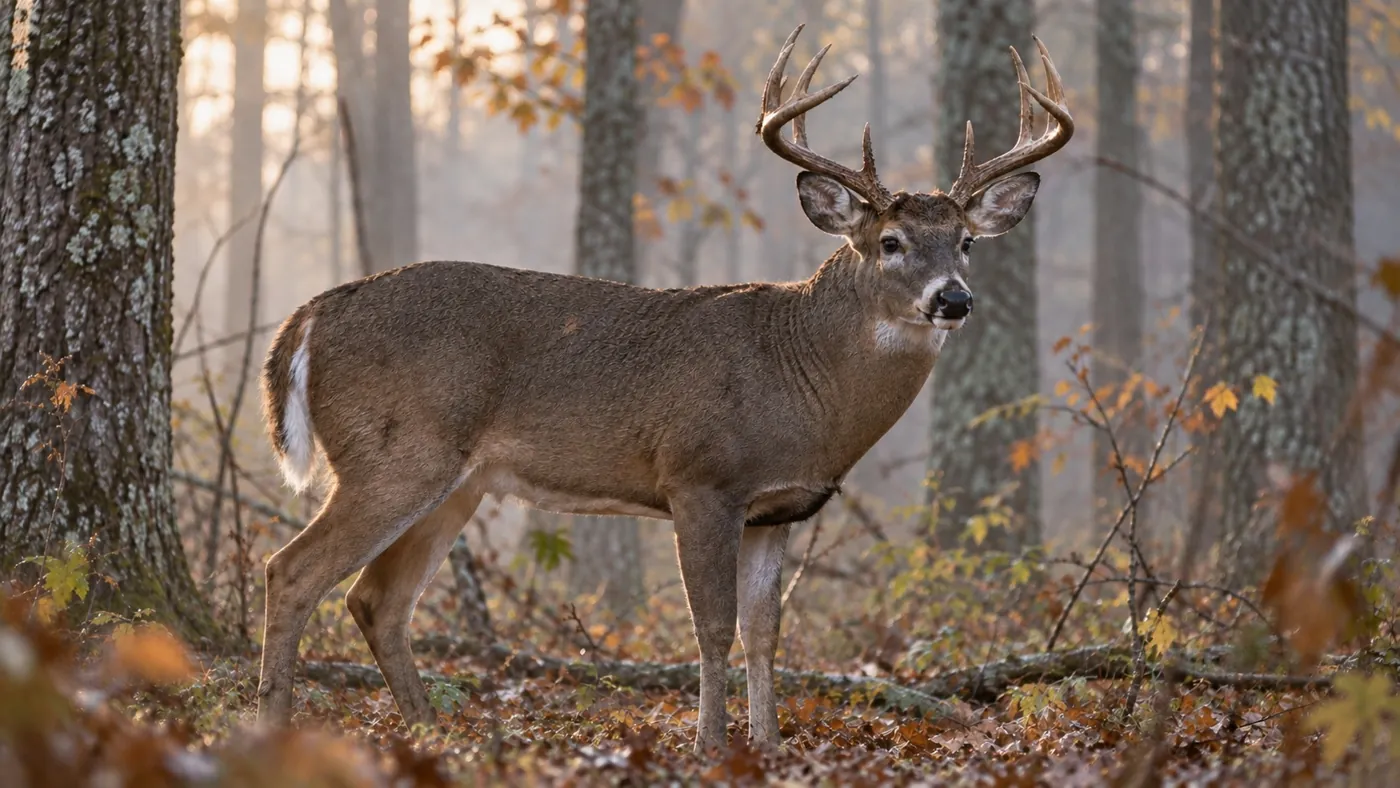
Every part of the animal.
Select any part of the animal, or its surroundings, to see what the research says.
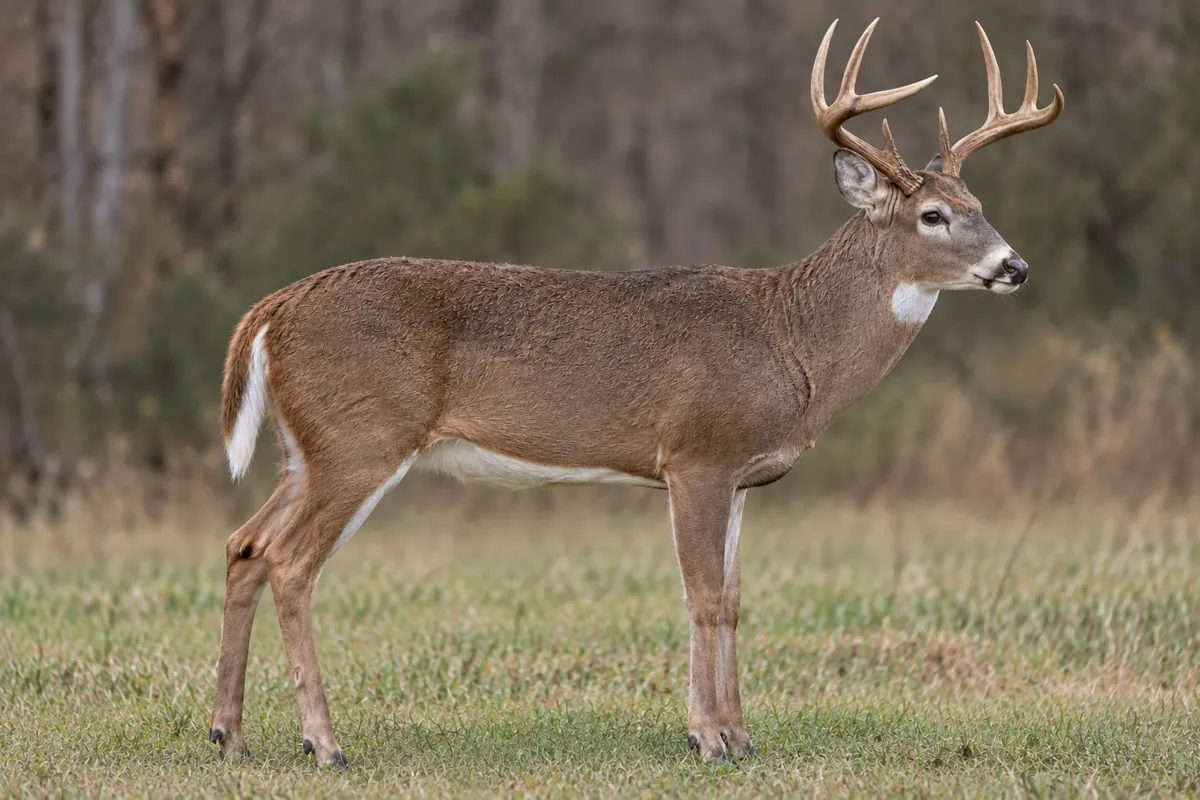
Antlers
True bone, grown and shed every year. Regulated by testosterone, which is regulated by day length.
Antlers & growth →Ears
Rotate independently. Hears 0.25 to 30+ kHz, sharpest at 4–8 kHz — higher than ours, not much wider.
Senses →Eyes
Two cone types, a horizontal pupil, UV sensitivity, near-panoramic field. Sees motion, not orange.
Vision →Nose
A large olfactory epithelium plus a vomeronasal organ. The sense that ends most hunts.
Olfaction →Scent glands
Five glands — tarsal, metatarsal, interdigital, preorbital, forehead — carry a chemical ID.
Scent glands →Hooves & tracks
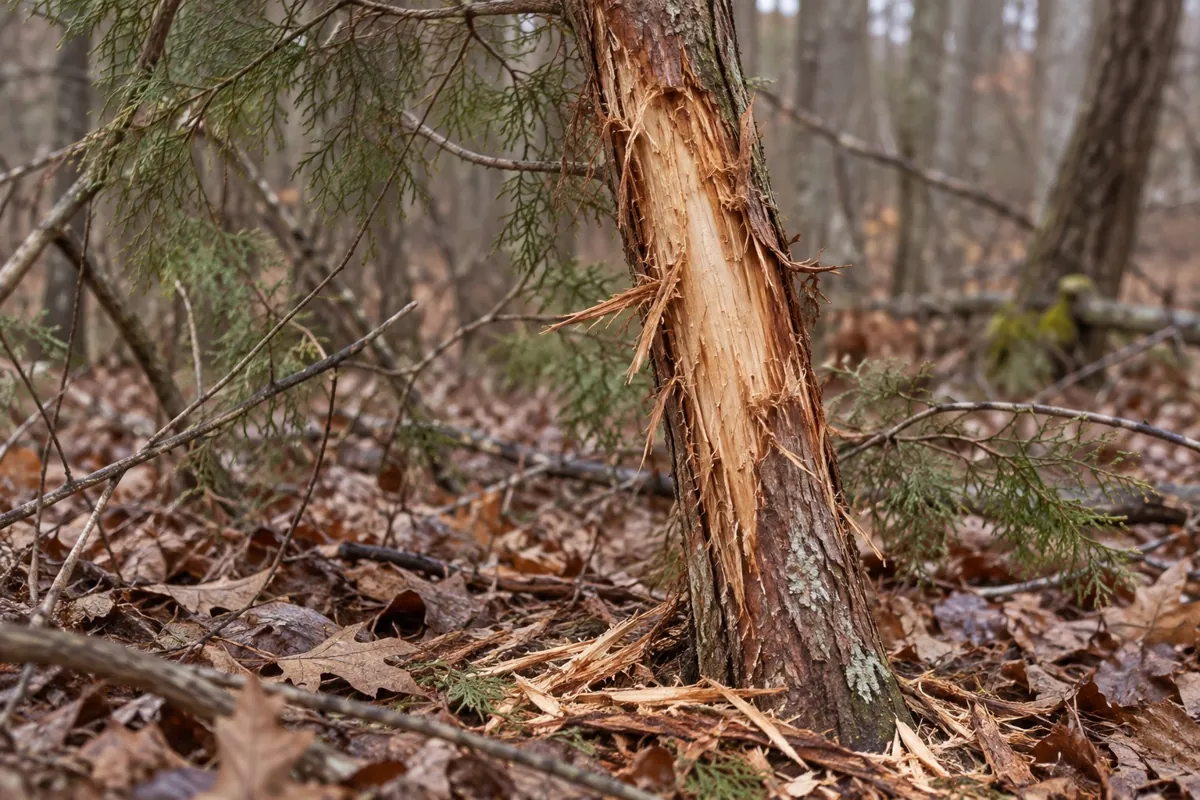
Cloven, with dewclaws. Track size and stride are age and sex clues — with known error.
Tracks & sign →Body & coat
Weight by region and age, the twice-yearly molt, and why northern deer are heavier.
Body & coat →Digestion
A four-chambered ruminant. Microbes do the digesting, and they adapt slowly.
Rumen & nutrition →Food
Forbs, mast, browse and ag — what a whitetail eats each season, and how much protein it needs.
Food by season →Bedding
Wind at his back, thermal drift in his nose, a view downhill. Why a buck beds where he beds.
Bedding & cover →Habitat
Edge, early succession, mast-producing timber and water. What a home range has to contain.
Habitat & range →The rut
A calendar set by photoperiod, not the moon. Conception dates by state and county.
The rut →The reference in eight sections.
Each section opens with a diagram, states what is known and how well it is known, and ends with the studies it rests on. Read straight through, or jump to what you're hunting.
The Animal
Taxonomy, subspecies, body plan, the four-chambered rumen, scent glands, hooves, coat and seasonal molt.
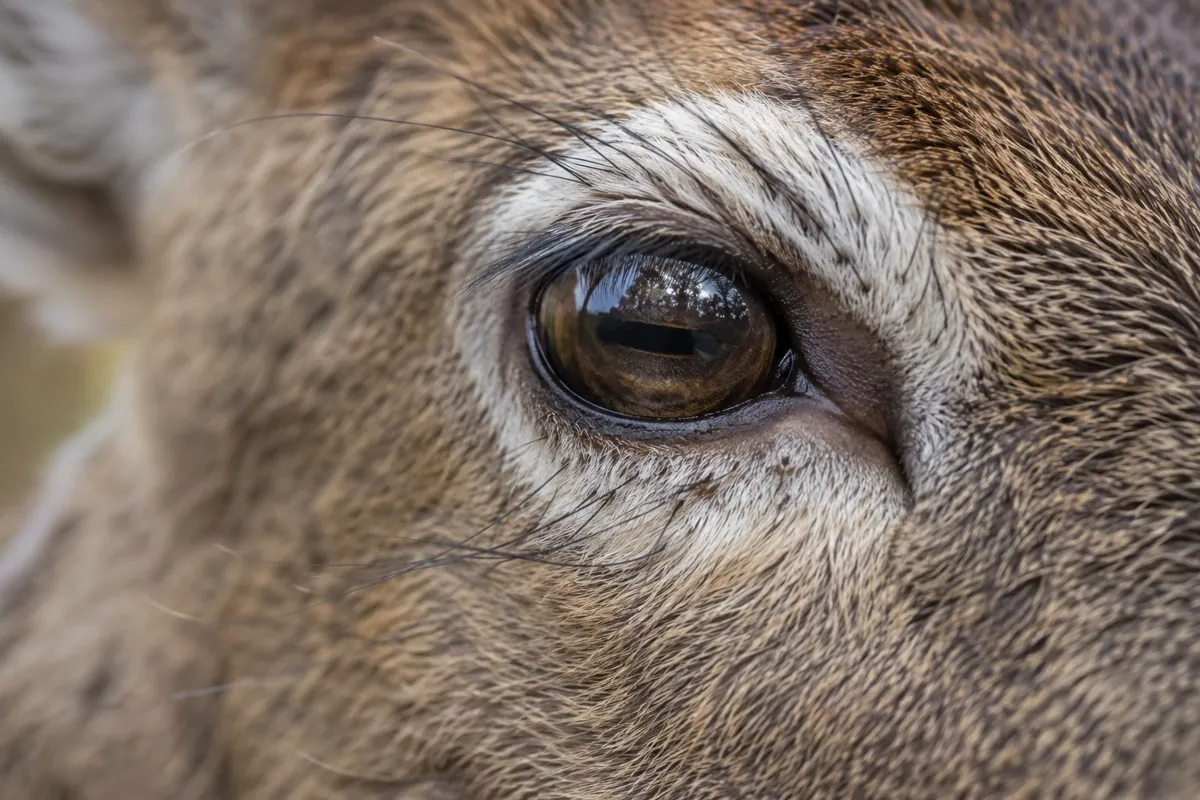
Senses
Vision, olfaction and hearing measured in the lab — and the limits of what the lab can tell a hunter.
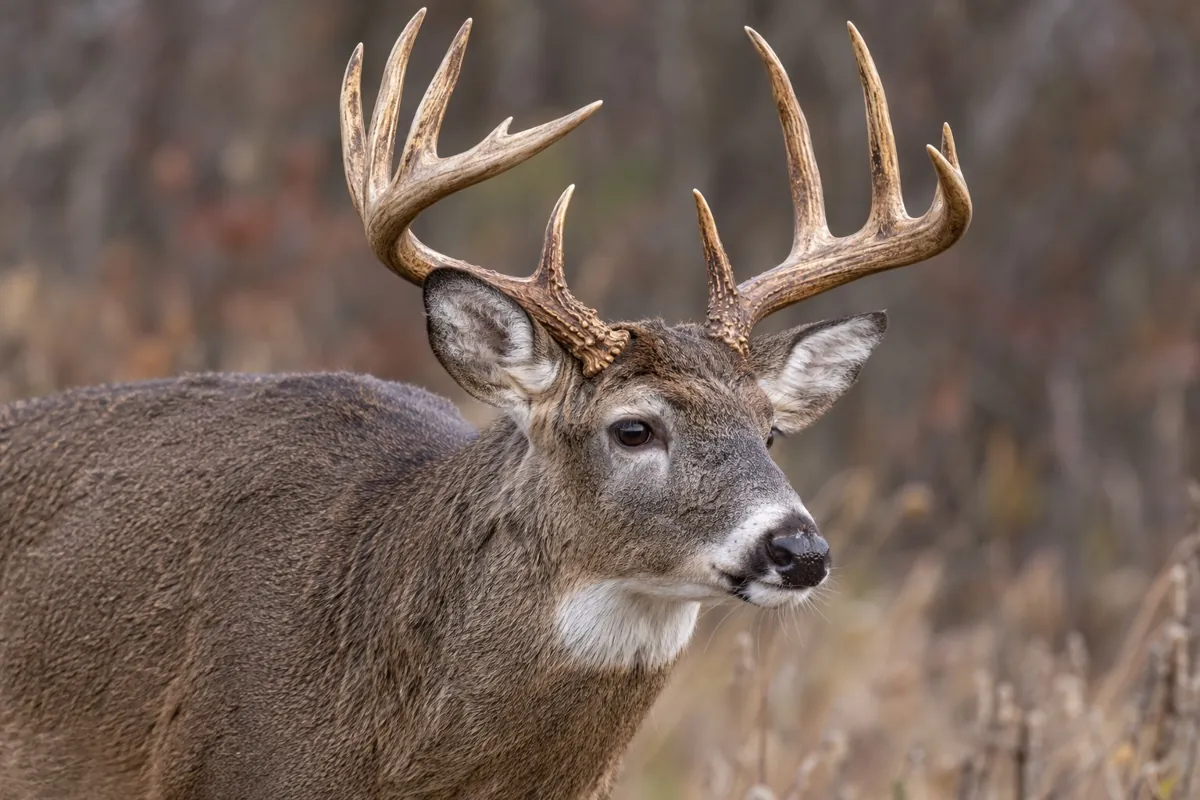
Antlers & Growth
Among the fastest-growing tissues in mammals: the annual cycle, testosterone, age vs. nutrition vs. genetics, scoring and the myths.
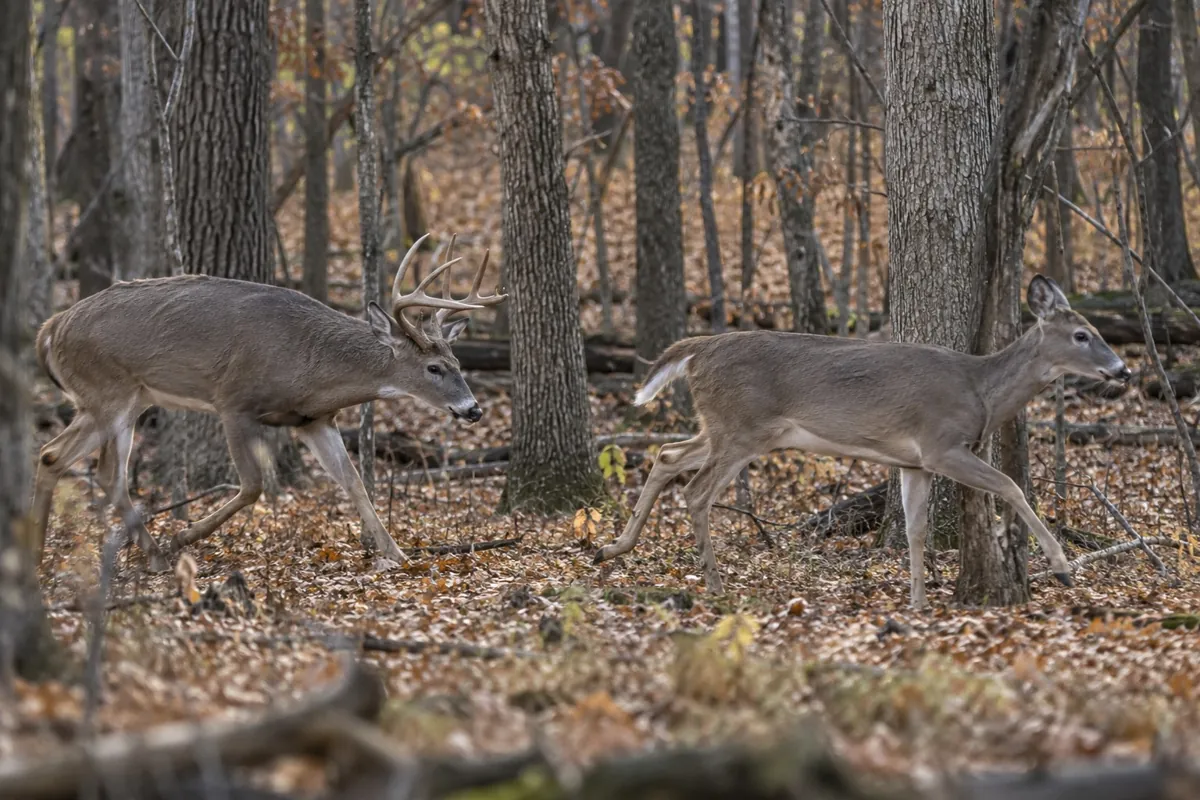
The Rut
Photoperiod and hormones, the phases, estrus, breeding behavior, and rut timing by state and county from conception-date data.
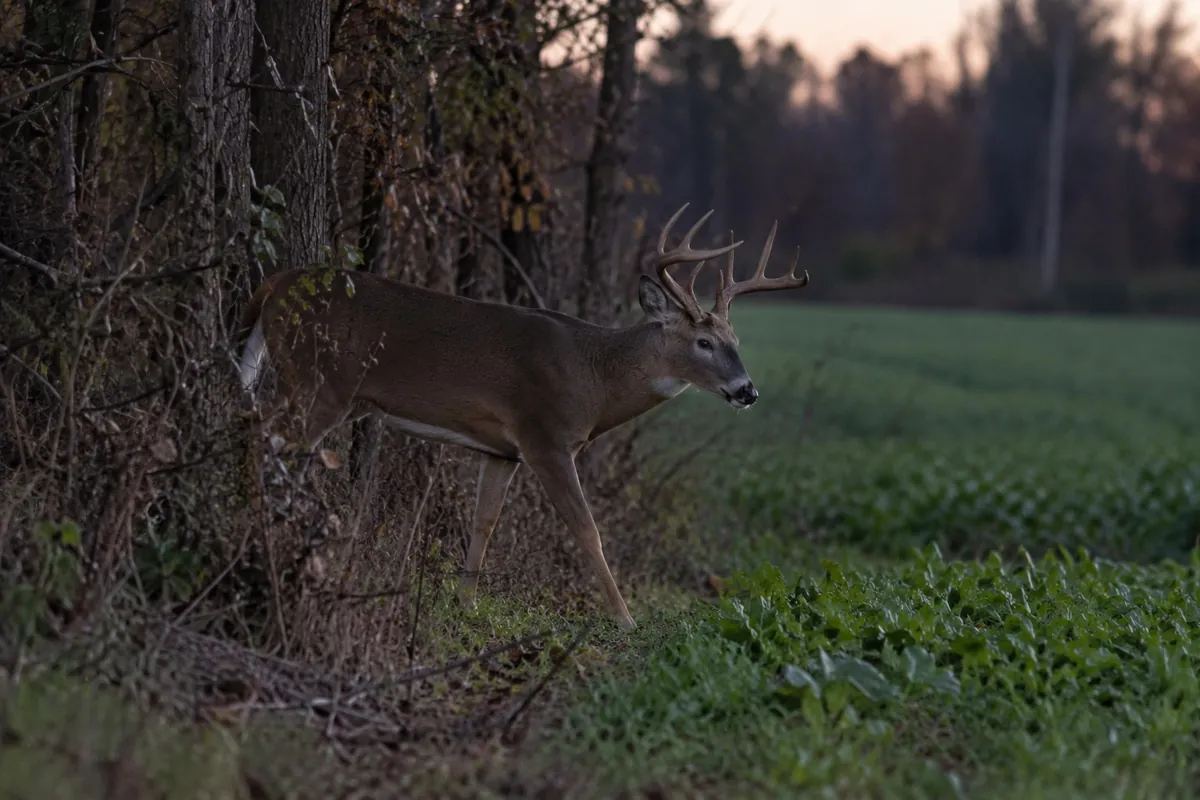
Movement & Home Range
Two decades of GPS-collar data: how big a range is, what a core area means, daily rhythms, excursions and yearling dispersal.
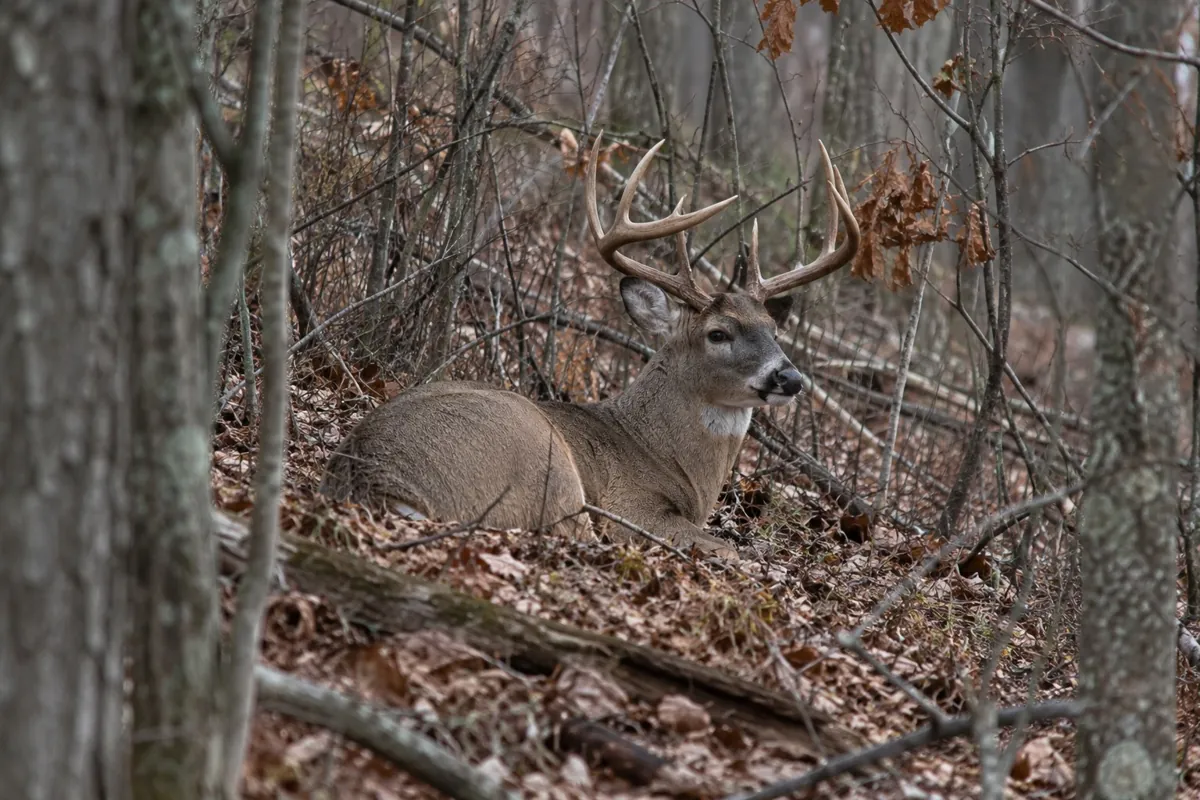
Bedding & Cover
Why a buck beds where he beds — wind, thermal, sight lines and pressure — and how it changes by season and region.
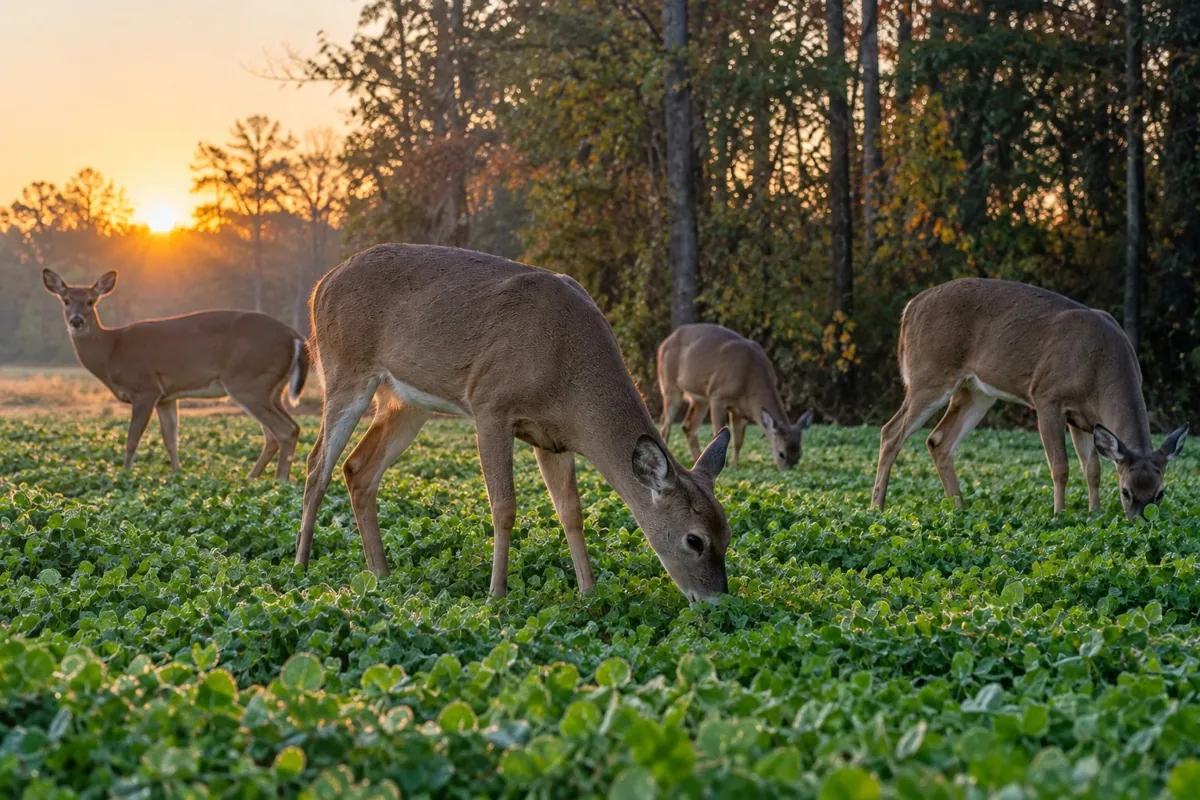
Food & Nutrition
Ruminant digestion, seasonal diet by region, mast, browse and agriculture, protein and mineral requirements.
Age, Population & Disease
Aging by tooth wear and body, age structure, sex ratios, recruitment, and CWD, EHD and the other diseases that matter.
How a whitetail sees.
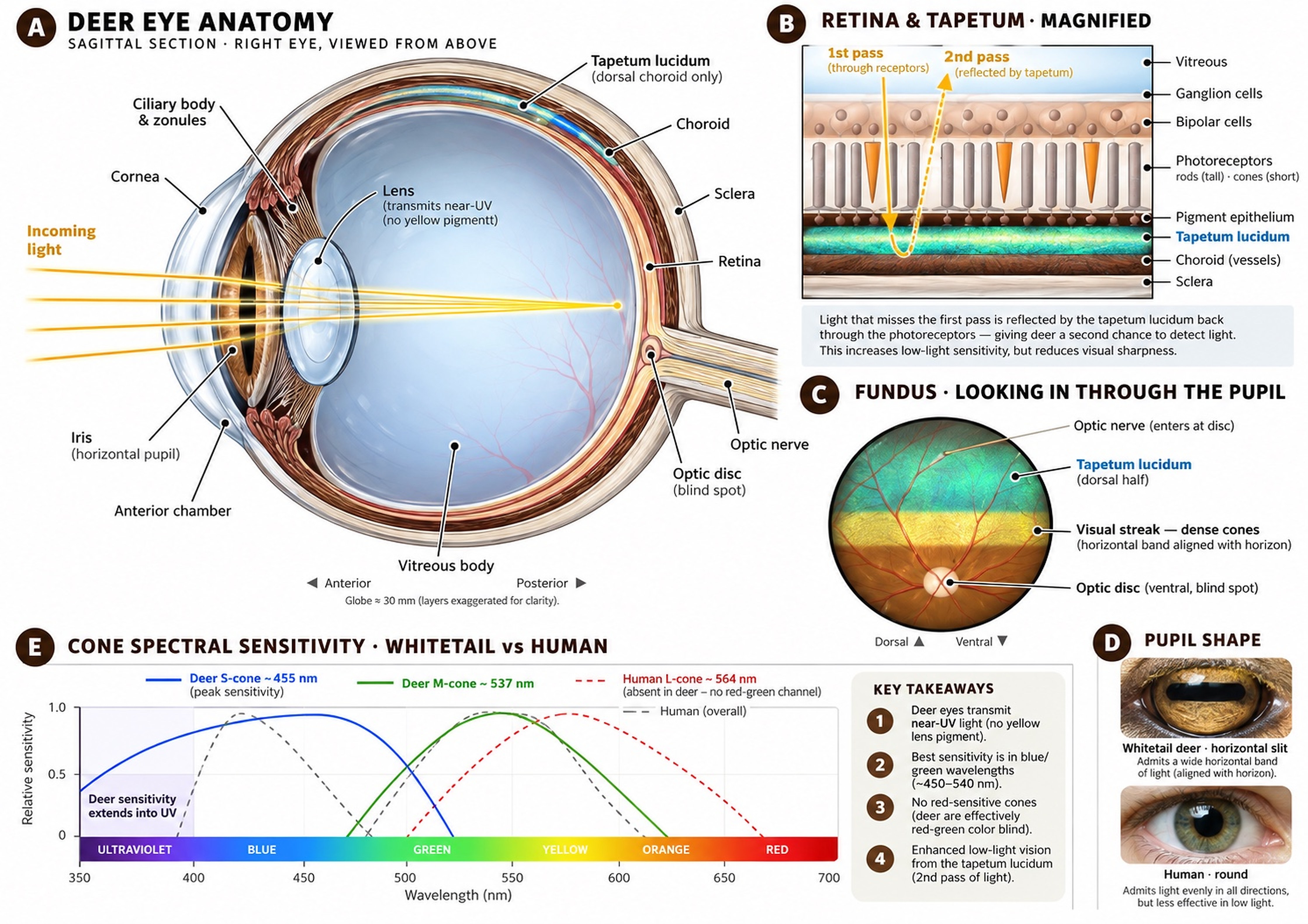
A whitetail's eye is built for a different job than yours. The pupil is a horizontal slit, the retina carries a horizontal band of high receptor density instead of a central fovea, and the lens lacks the yellow pigment that filters ultraviolet in the human eye.1,2 Together they produce near-panoramic coverage, poor fine detail, excellent motion detection, and sensitivity into the near-UV.
There are two cone types, not three. The middle-wavelength cone peaks near 537 nm; there is no long-wavelength receptor.1 Red, orange and green therefore collapse toward one perceived hue — the reason blaze orange reads as a dull yellow-brown mass to a deer rather than a warning.
How antlers grow, harden and cast.
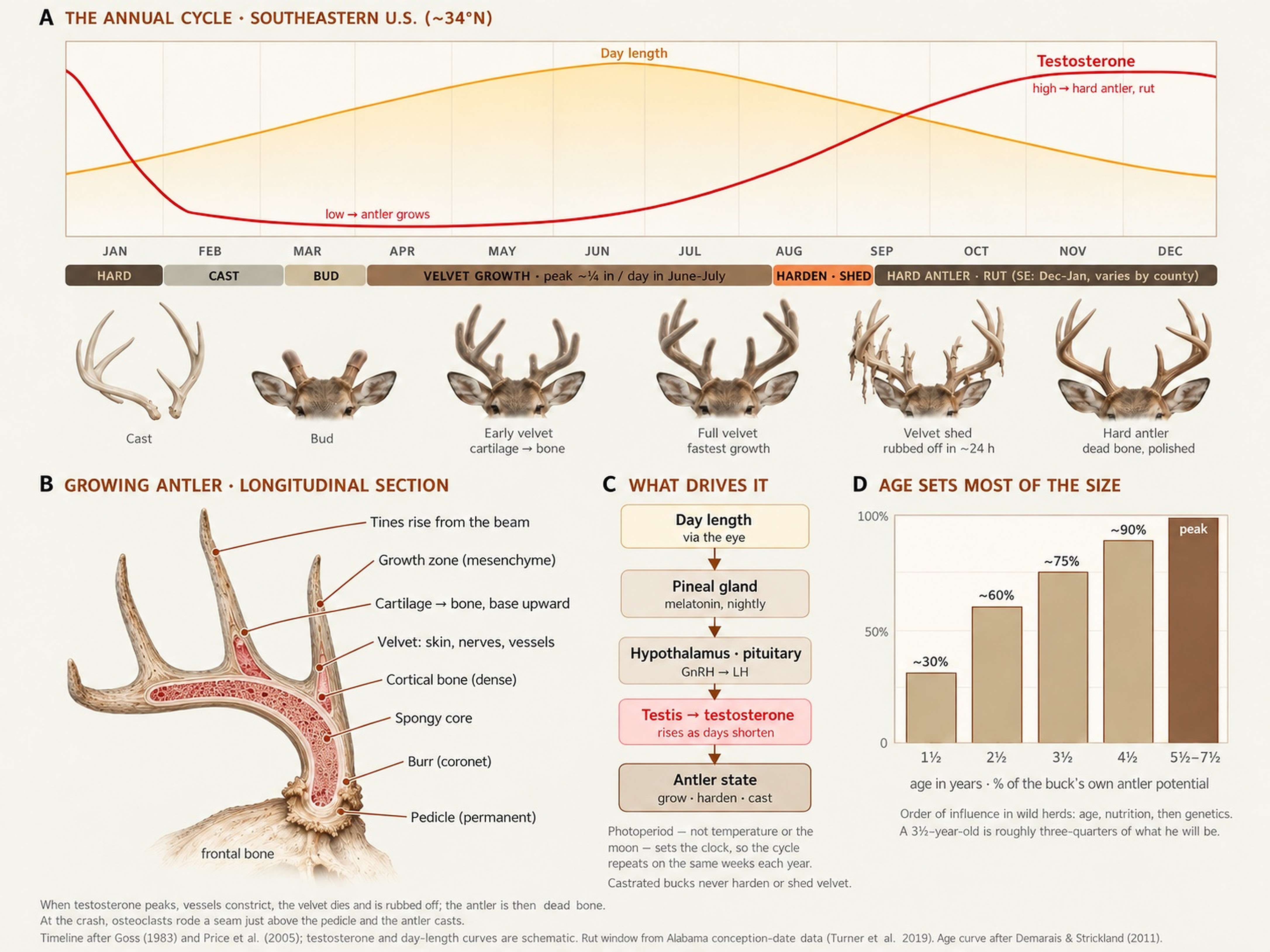
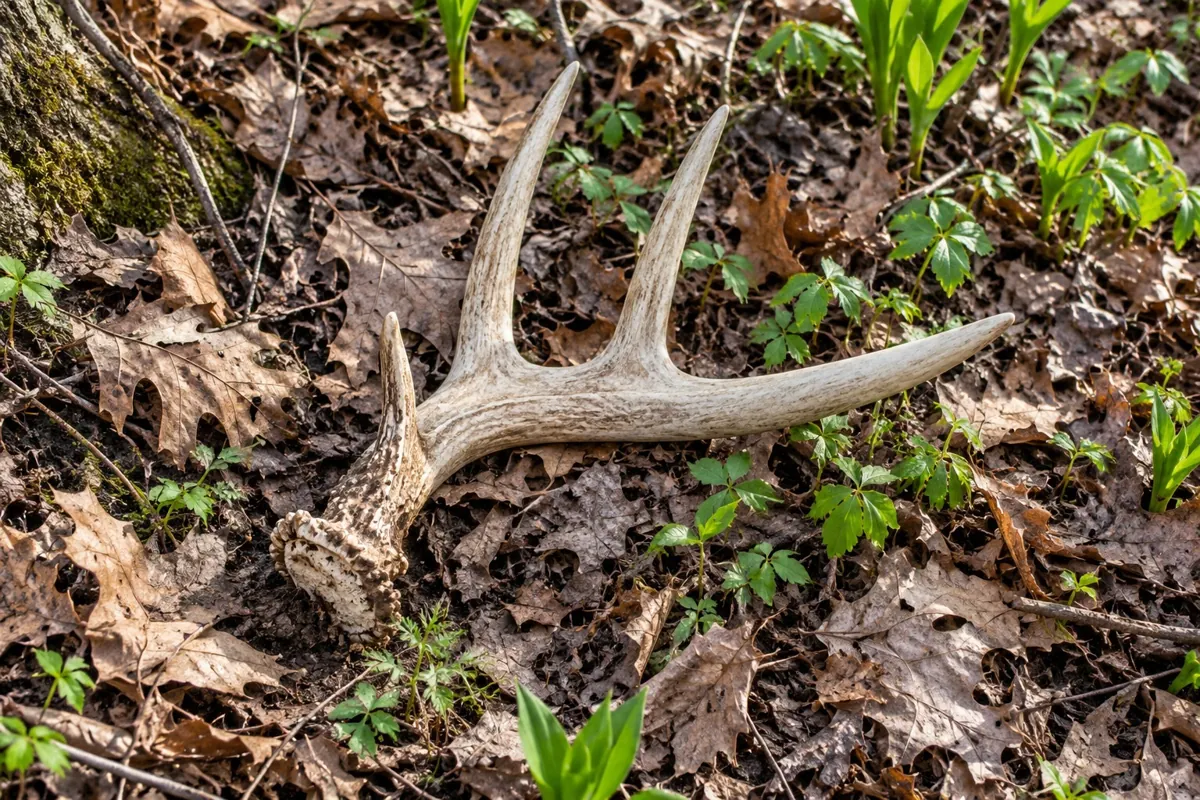
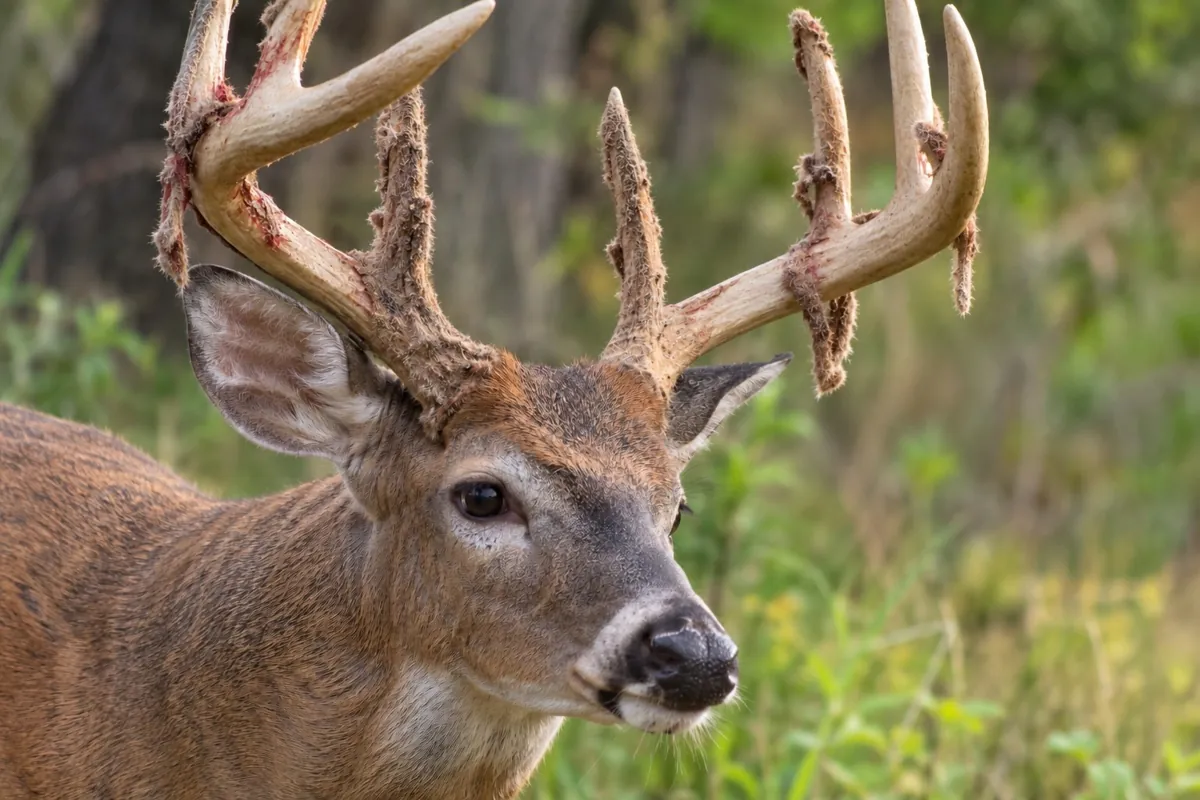
Antlers are true bone, grown from pedicles on the frontal skull and shed annually — the only mammalian organ that regenerates completely.4 Growth begins in spring under low testosterone, proceeds under a vascular skin called velvet, then mineralizes as testosterone rises toward the rut. When testosterone collapses after breeding, osteoclasts dissolve the base and the antler casts.
Three variables set size, and the research ranks them clearly: age first, nutrition second, genetics third — and the one a manager can do least about in a wild herd.5 Bucks typically reach about 90% of their antler potential by 4½ and peak between 5½ and 7½, which is why a 3½-year-old is not "done."
| Age | ≈ % of antler potential |
|---|---|
| 1½ | ~30% |
| 2½ | ~60% |
| 3½ | ~75% |
| 4½ | ~90% |
| 5½–7½ | 95–100% |
What sets the timing of the rut.
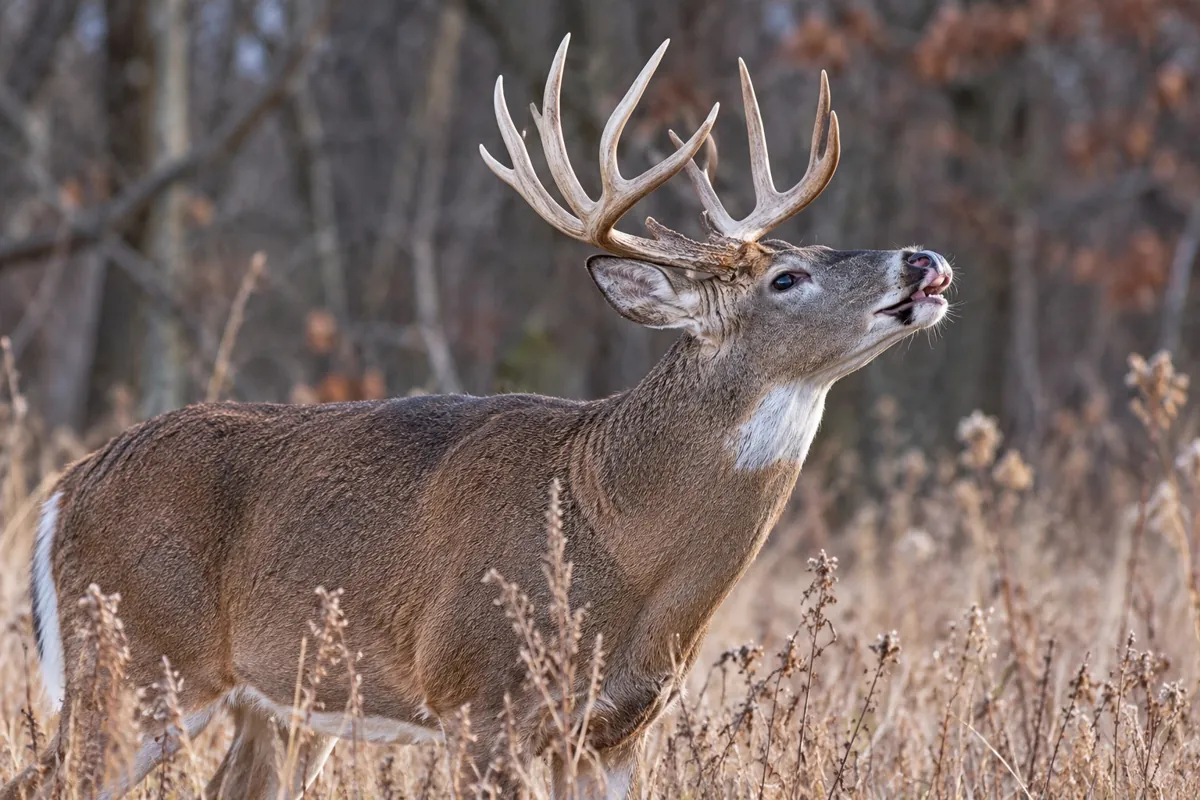
Breeding is timed by photoperiod — declining day length triggers melatonin, which triggers the hormonal cascade in both sexes.6 That is why the rut in a given place happens the same weeks every year regardless of moon or weather, and why it varies wildly between places: most of North America peaks in early-to-mid November, while parts of the Deep South — from Mississippi and Alabama into Florida and south Texas — run anywhere from December to February, and can differ by 60 days or more between populations inside a single county.7
The most reliable measurement is not sign or sightings but conception dates, back-calculated from fetal measurements collected by state agencies. Section 4 maps those data by county wherever they exist.
How a whitetail digests what it eats.
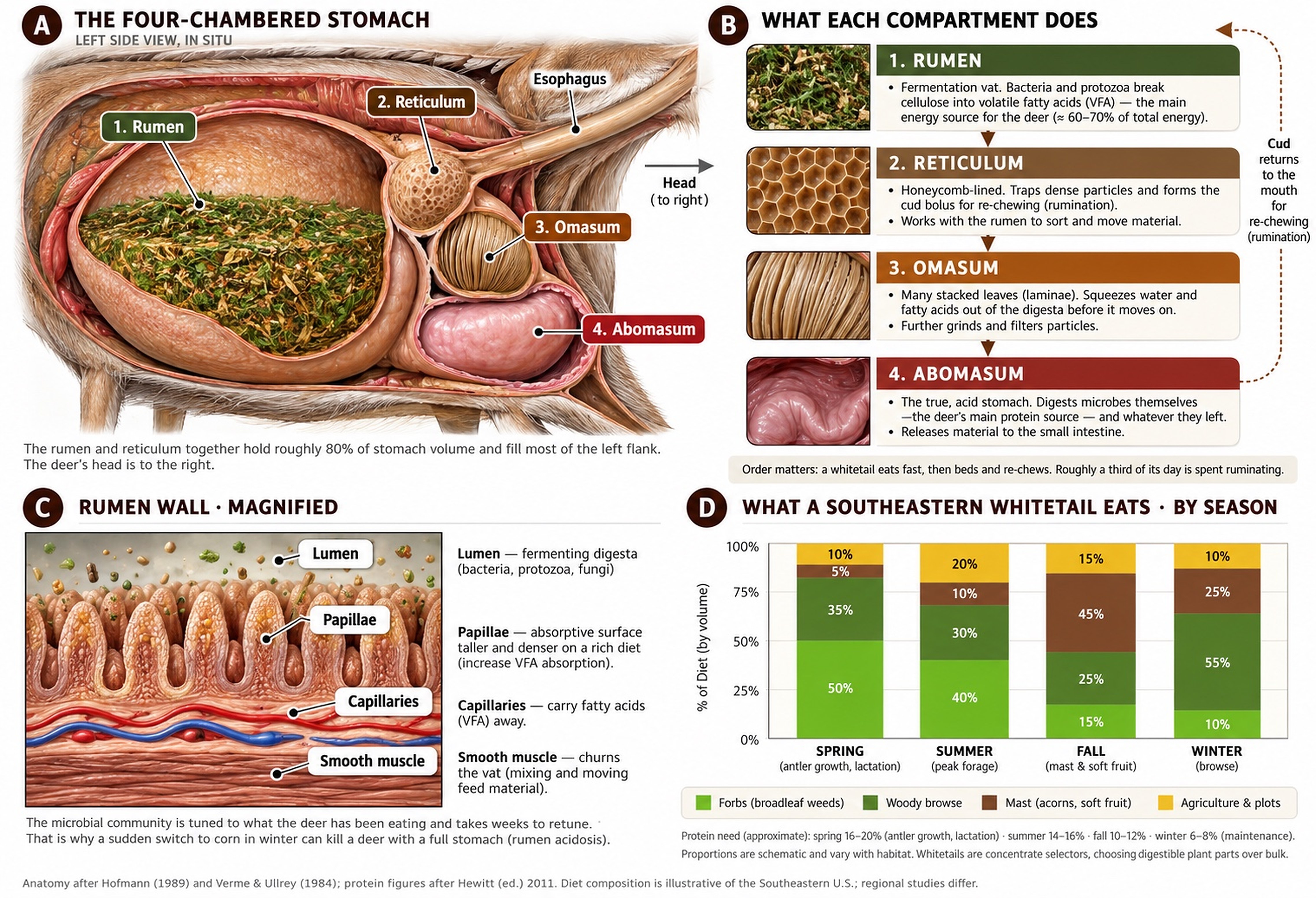
Whitetails cannot digest cellulose themselves. The rumen — the first and largest of four stomach compartments — houses bacteria and protozoa that ferment plant material into volatile fatty acids, which supply most of the animal's energy.9 The microbial community is specialized to whatever the deer has been eating, and it changes slowly.
That single fact explains most of whitetail feeding behavior: why diet shifts gradually through the year, why deer starve with full stomachs during a hard winter if the forage changes too fast, and why a food plot planted in the wrong season is ignored.10
| Season (SE US) | Dominant intake | ≈ Crude protein need |
|---|---|---|
| Spring | Forbs, new browse | 16–20% (lactation, antler) |
| Summer | Forbs, soft mast, ag | 14–16% |
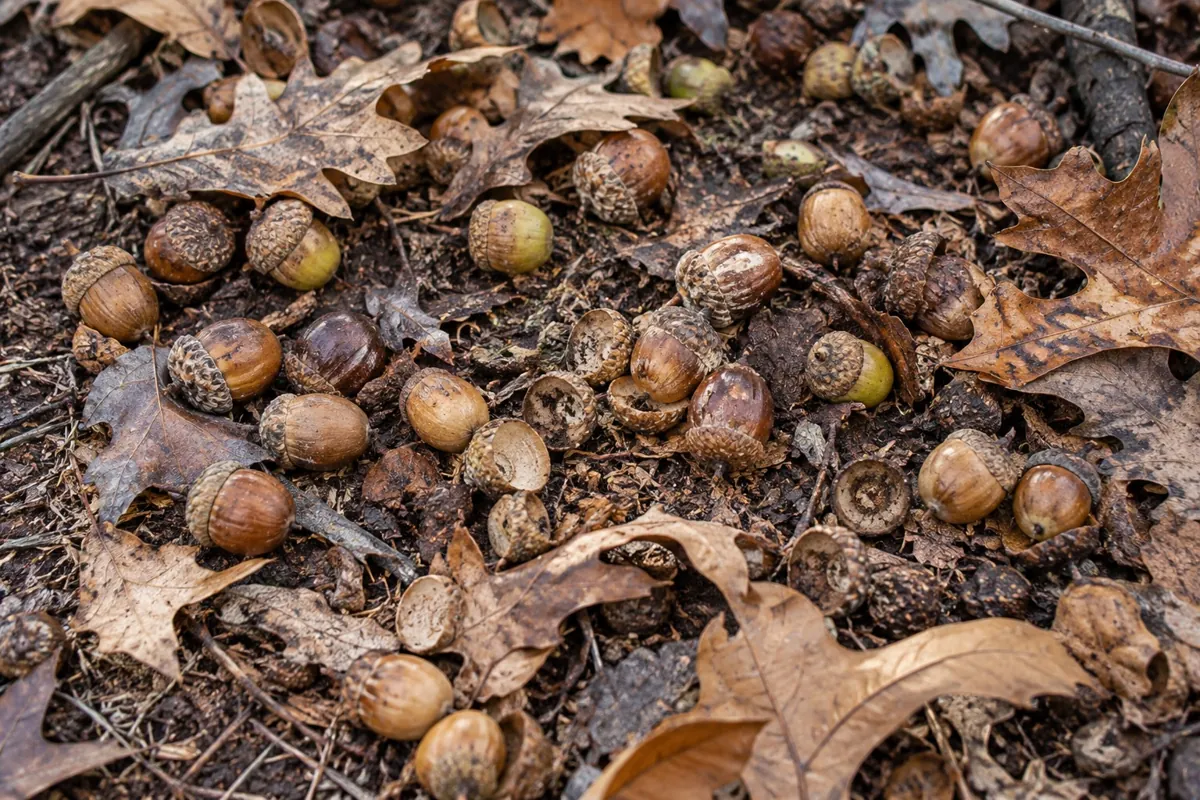
| Fall | Hard mast (acorns), ag | 10–12% |
| Winter | Browse, remaining mast | 6–8% (maintenance) |
Common questions.
Can deer see blaze orange?
Not as a distinct color. Whitetails are dichromats with cone peaks near 455 and 537 nm and no long-wavelength cone, so red, orange and green collapse toward one hue. Orange reads as a dull yellow-brown, not a warning color. Movement and scent are what give a hunter away (Jacobs et al. 1994).
Can deer see ultraviolet light?
Yes, into the near-UV. The whitetail lens lacks the yellow pigment that blocks UV in the human eye, so wavelengths down to roughly 350 nm reach the retina. UV brighteners in laundry detergent are visible to deer in low light (Cohen et al. 2014).
Why do deer eyes shine at night?
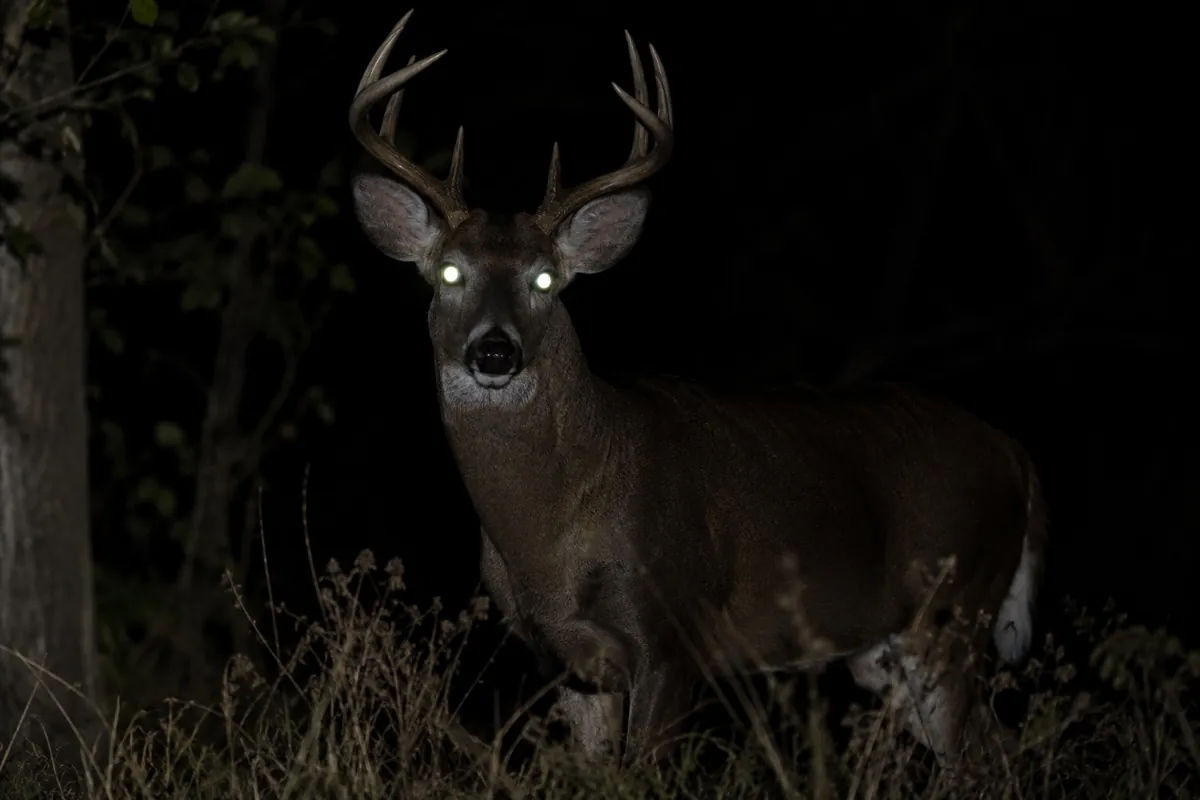
A reflective layer behind the retina, the tapetum lucidum, bounces light that missed the photoreceptors back through them for a second pass. That improves night vision at the cost of sharpness, and it is what produces eyeshine.
When is the whitetail rut?
Across most of North America, breeding peaks in early-to-mid November, set by day length. The Deep South is the exception: conception-date data from Mississippi to Florida and south Texas show peaks anywhere from December to February, and timing can differ by 60 days or more between populations inside a single county (Sumners et al. 2015; Turner et al. 2019).
Does the moon affect the rut?
No measurable effect. Studies using conception dates from captive and wild deer found moon phase did not predict breeding timing for individuals or populations. Day length sets the rut (Dye et al. 2012).
At what age do a buck's antlers reach full size?
Bucks reach roughly 90% of their antler potential by 4½ and peak between 5½ and 7½. Age is the largest factor, then nutrition, then genetics (Demarais & Strickland 2011).
How many stomachs does a deer have?
One stomach with four compartments: rumen, reticulum, omasum and abomasum. Microbes in the rumen ferment plant material into volatile fatty acids, the deer's main energy source, and the microbes themselves are digested in the abomasum as its main protein source.
Why can a sudden switch to corn kill a deer in winter?
The rumen's microbial community is tuned to the current diet and takes weeks to adapt. A sudden load of starch drives rumen acidosis, which can kill a deer that still has a full stomach.
Sources.
Every section is written from primary literature and state agency data. These are the programs that produced most of what is known about the whitetail.