Short answer: The best stand on the property is worthless if the only way to reach it is through the bedding area. Access is the constraint that should decide your stand, not an afterthought once you have already picked one.
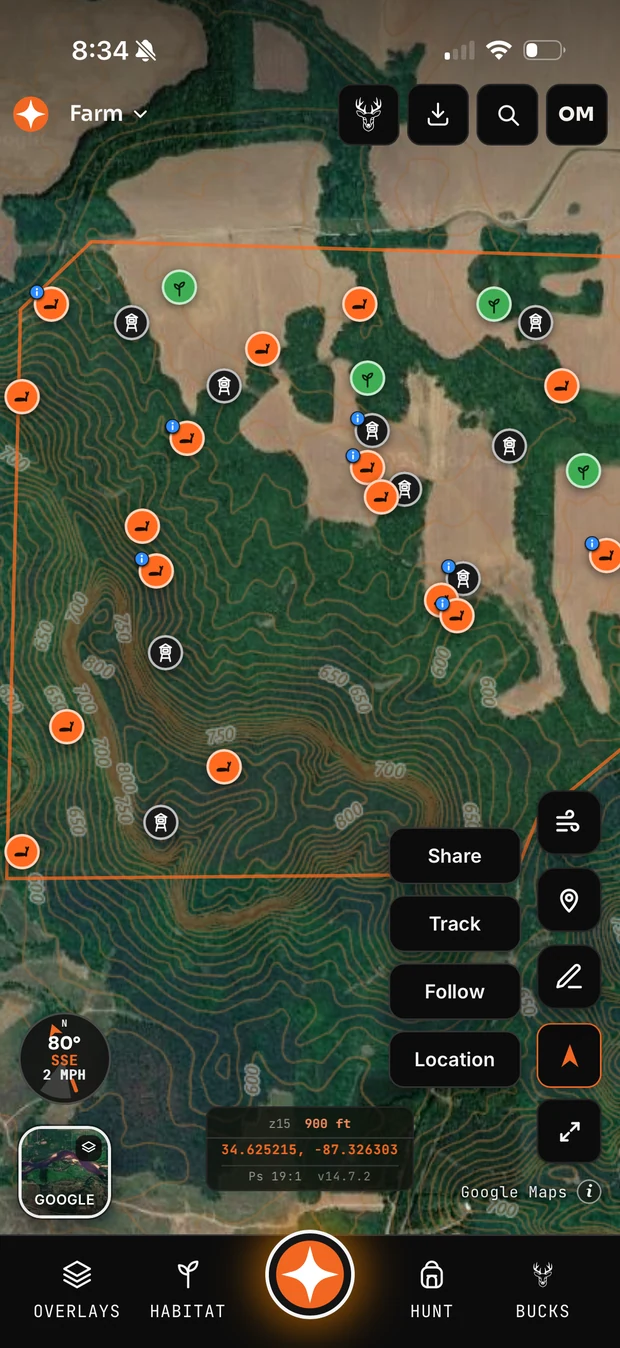
Why access matters more than most hunters think
A mature buck does not need to see you. He needs to smell where you walked, or hear you, or find your track across his trail at first light. Every one of those teaches him something, and unlike a spooked encounter, you never find out it happened.
This is why hunters lose deer they never knew were there. The stand seemed fine, the wind was right, and nothing came through — because the deer that used that funnel cut your entry trail two hours earlier and went around.
The three rules
- Never walk through where you expect deer to be. Obvious, routinely violated because the direct route is shorter and it is dark and you are late.
- Put terrain or water between you and bedding. A creek, a ditch, the back side of a ridge — anything that absorbs scent and sound and keeps your route out of the wind carrying to bedding.
- Plan the exit before you plan the entry. Evening sits end with deer in the field between you and the truck. If you cannot get out clean, you will educate every deer on the property on your way home.
Terrain features that make good access
Creek bottoms are the classic — running water covers sound, the low ground keeps you out of sight, and morning thermals pull your scent down and away rather than up into bedding. Field edges work in daylight but are exposed at dawn. Old logging roads are quiet underfoot and usually already exist on the map.
The thing to avoid is the ridgeline. It feels efficient and it broadcasts your scent across everything below on both sides.
Evening exits, specifically
The hardest problem in whitetail hunting is getting out of a field-edge stand at dark with deer feeding in front of you. The honest options are: have someone drive in to push them off, wait until full dark and slip out low, or do not hunt that stand in the evening at all.
Hunters who ignore this burn their best evening stands by the second week of the season and never connect the two things.
Common questions
How far should my access route be from bedding?
Further than your scent carries in the prevailing wind, which on open ground can be several hundred yards. Terrain and water between you and bedding matter more than raw distance.
Is it better to walk in early or late?
Early enough that the woods settle before first light — usually an hour before shooting light. Rushing in at grey light is worse than skipping the sit.
Should I use a light walking in?
A dim red light pointed at your feet is less disturbing than stumbling. What matters far more is the route, the wind and the noise you make.